(614) 653-8111 Sharhartnett@aol.com
Craniosacral Therapy for Children with ADHD

Craniosacral Therapy for Children with ADHD

Does Your Child have ADHD?

It’s sometimes difficult to distinguish whether your child is suffering from actual ADHD or experiencing life with a typically high activity level with a short attention span. But what a parent does know is that it can be challenging trying to fit their kids into a mainstream educational system without some extra support.


Massage Columbus

Regulating life through New Sensory Input.

At Lighten Up Therapies, we are not so concerned where your child falls in the spectrum of ADHD, but instead we choose to focus on giving your child a new integrative mind, body & spirit experience. We have been intrigued with the success that Craniosacral Therapy has had with young people in helping them to self-regulate and be more comfortable in their daily lives. A quote that describes our outlook to healing is well spoken by Moshe Feldenkrais, “What I’m after isn’t flexible bodies, but flexible minds and to restore each person to their human dignity.”  So how do we help children to find more joy and emotional balance through massage and bodywork?

It’s very helpful to imagine the mind as being inclusive of the whole body, and if you can even go outside the box a little further, into the complete human energy field. When we can allow kids to become mindful of their physical self and subtle energies if only for a few minutes here and there during a session, the brain becomes better informed. Sensory information attained through the fascial and nervous system can enliven the DNA to express itself in a new way and change our thinking and expression. By touching into the continuous web of dialogue, children can become better educated to find quiet and self-correction

One of the first things that is helpful for children during a session is to induce a still point. A still point is a period of time in which the cerebral spinal flow comes to a rest, allows improved circulation to the brain, and helps relieve adhesions around the brain’s membranes and spine. Still points can be very calming and nourishing to the nervous system. It may take time with children who don’t want to sit still, but with patience, still point is a practice that can be taught to parents and felt deeply relaxing by their children.  One of the best things a practitioner can do is give their clients tools to take home to carry the work forward.

While children with ADHD might initially avoid this type of experience, eventually- the new felt sense of the subtle work of Craniosacral regulation will begin to take root. The calm will open the doorway to a more relaxed sense of wellbeing. At this point, we can then proceed with checking the diaphragms for release, listening to the flow around the spine and brain, and to encourage symmetry, strength and coherence within all the systems. With this work, as the structure changes, so does the way the energy moves The internal environment can integrate with the mind body & spirit sense of reconnection!

One of the best things you can do it interview. Sharon Hartnett LMT CST offers 15 minute free phone sessions to answer your questions at: 

FAQ Page

Sharon Hartnett CST-D

Worthington, Ohio|Serving the Columbus Area

614 653-8111

To find out more about Craniosacral Therapy, check out my main page.

Helping your children to become more focused and centered is an experiential commitment.  It often takes time to see improvements, but in most cases, dramatic change does show up.

If you would like to try a session to gain your own first hand experience of Craniosacral Therapy, ask for $10.00 of your first session. 

www.upledger.com

What is Craniosacral Therapy? Sharon Hartnett CST in Columbus, Ohio

What is Craniosacral Therapy? Sharon Hartnett CST in Columbus, Ohio

When I tell people I specialize in Craniosacral Therapy,  they often ask me to describe what it is. While Craniosacral Therapy has been around for a while, it is just now coming more into the forefront as being known as an effective integrative health approach. So in order to bring even more clarity to this field of healing, I want to present this short blog entry. If you have any further questions, please feel free to contact me, Sharon Hartnett, LMT, for a free 15 minute phone consultation 

                             614 653-08111

Craniosacral Therapy is a light touch type of bodywork that enhances the functioning of the whole body by working primarily with the Cerebrospinal fluid around the nervous system. This is done with palpation from the feet all the way to the head. The name “Craniosacral Therapy” can be misleading because while the main focus is on listening at the cranium and the sacral area, this gentle manual therapy may be approached from anywhere on the body. During a session, a client remains fully clothed and lies down on the table for about an hour. The therapist will follow listening stations and help the body find its own healing course. Craniosacral Therapy’s relaxing and balancing effects may be felt physically, emotionally and spiritually throughout the session and afterwards.


Craniosacral in Columbus

Craniosacral Flow


A Craniosacral Therapist is a listener of the craniosacral rhythm much like a Counselor may listen to the words of a client. As the session progresses, the client often calms down and lets go of stresses and pain. The therapist is guided by the body’s own intelligence to follow any dysfunctional patterns and to help the system to self-correct.  The quality, symmetry and strength of the craniosacral movements are strong indicators if there are restrictions or weakness in a certain area.  As certain patterns are tenderly touched, unwinding and lengthening may occur allowing healthier interaction between the nervous system and the tissues. Often people who come to a Craniosacral Therapist for a series of sessions after finding no relief elsewhere end up feeling more vitality and release of deep pain patterns.


For a quick Youtube layout of the work, check out one of my earlier teacher’s explanation of the work:


https://youtu.be/vn7AC6iktmU


Craniosacral Therapy has been helpful with relieving traumas from the body on many different levels. Once these traumatic experiences are processed in a healthy environment, the person usually feels freed up to live more fully from a clear more positive intentional place.

Sharon Hartnett CST-Diplomate specializes in helping people with anxiety & related issues, concussions, and chronic pain.

FAQ Page

Sharon Hartnett CST-D

 (614) 653-8111

Text: To learn about my Craniosacral Therapy services, visit my  my Main Page Here.   Link


Positional Release for Neck Pain After Surgery: What Helped Me Heal

Positional Release for Neck Pain After Surgery: What Helped Me Heal

It’s been almost a year now since my neck surgery.  I had a bone spur pressing into my spine and was in excruciating pain.  There were not many options, so I made the best decision I could and went in for my first surgery ever to replace my disc.

After the first week or two, I felt very weak in the neck, but the pain was minimal.  I said goodbye to my pain medications and hoped to feel back to normal quickly.  Well, that did not happen.  The doctors say it may be 6 months or so, but it can take longer.  And I am here to tell you that if you want to feel better, it is up to you to take responsibility for your own self care. Once the surgery is done, only you can find the best healing plan for you.

Massage in Columbus Ohio

Recovering after Spine Surgery


Positional release is a gentle technique where you rest your body in a comfortable position so tight muscles and joints can let go. After my neck surgery, stretching and exercise were too much for me. Positional release was the gentle practice that finally gave me back my freedom of movement.

I’m Sharon Hartnett, a craniosacral therapist in Columbus, Ohio. Here is what worked for me, and how you can try this at home.

Why I needed a long-term plan

My body had gone out of alignment from a combination of factors. I was a little overweight, I didn’t always pay attention to my posture while working on the table with clients, and my body type wasn’t naturally balanced. Even after my [cervical/neck] surgery, I needed a plan to feel better for the long haul.

I’ve focused a little on each approach below, but I choose where to spend most of my energy, which gives me a more holistic sense of health and wellbeing.

What helped my recovery

  • Positional release: gentle, daily, and the biggest game-changer for my neck (more below)
  • Physical therapy: guided strengthening and movement
  • Healthier diet: supporting my body’s healing from the inside
  • Exercise: added gradually, once my body was ready
  • Basic stretching: gentle and consistent
  • Massage, craniosacral therapy, and structural integration: hands-on bodywork to release tension
  • Yamuna Balls and rolling: self-massage for tight spots
  • A gentle home traction machine: for easing the neck at home
  • A chiropractor with a good reputation: reputation matters, so ask around

You may already know how to follow most of these. Positional release is the one I want to explain, because you rarely hear about it and it can be remarkably effective.

What is positional release?

Positional release (also called strain-counterstrain) is a soft tissue technique in which the body is placed in a comfortable position that eases pain and dysfunction. A massage therapist listens to your body to find the position that triggers nerve reflexes to relax the muscle. As the muscles and joints calm down, range of motion and ease of movement often improve quickly.

It’s very helpful to start with a massage therapist who can hold the positions and teach you the technique. Once you get a feel for how it works, it becomes a daily practice, like a mini yoga routine without the work.

How to do positional release at home

This is how I practice every morning to support my neck and body. I spend about 30 minutes in bed.

  1. Set up in bed. Lie on your back or belly and prop yourself with pillows. I often lie on my belly with a pillow propped under me and turn my head to different angles.
  2. Move slowly and mindfully. Ease into a position until you feel mild discomfort and a little resistance. On a scale of 1 to 10, aim for about a 2 or 3.
  3. Rest for about a minute. Notice whether the discomfort fades or builds.
  4. Back off if it’s too much. Never rest in anything more painful than a 2 or 3. If it’s too intense, move away until you’re comfortable.
  5. Try new angles. Repeat with different head and neck positions, resting each time until you find more ease.

Why it worked for me after surgery

In the beginning after my surgery, I tried stretching and exercises, but it was too much for my body. Daily positional release was gentle enough, and it has finally started giving me the freedom of movement I want again. It also helps me trust my body’s own healing mechanisms and work within a range of comfort.

Who can benefit from positional release?

Positional release is often combined with other soft tissue therapies. It’s commonly used for:

  • Post-surgical aftercare
  • Headaches
  • Postural issues
  • Fibromyalgia
  • General flexibility

It’s easy, and it’s empowering because you can do it at home without special equipment.

One year later

This January marks my first full year after surgery. My neck feels much better, and my muscles are more balanced and looser. I stay in tune by constantly listening to my body. Self-care is an ongoing process, and it’s easy to get off course when life is busy. But health begins with us, and it really is important to start from within.

Frequently asked questions

How long should I hold each position?
About a minute, or until you notice the discomfort easing. Move slowly in and out of each position.

Does positional release hurt?
It shouldn’t. You’re aiming for mild discomfort, about a 2 or 3 out of 10. If it’s more than that, back off.

Can I do positional release without a therapist?
Yes, many people practice it at home. Working with a massage therapist first can help you learn the positions and feel what’s right for your body.

Is positional release safe after surgery?
It’s a gentle technique often used in aftercare, but everyone’s recovery is different. Check with your surgeon before starting any new self-care routine.

How often should I practice?
I do it daily, about 30 minutes each morning. Start with whatever feels comfortable for you.


This post shares my personal experience and is not medical advice. Please check with your surgeon or healthcare provider before beginning any new self-care after surgery.

Anyone who has undergone surgery, my heart is with you. Listen to your own inner wisdom, because the freedom rests there.

Want help learning positional release in person? I offer craniosacral therapy in Columbus, Ohio and would be glad to guide you.

Warmly,
Sharon Hartnett
Craniosacral Therapist, Columbus, Ohio
614-653-8111
Serving the Columbus, Ohio area


Before you publish:

  • Fill in the surgery type in the bracketed spot. Specifics build trust with readers, Google, and AI tools.
  • Where you can, link items in the “what helped” list to pages on your site.
  • Add a photo of a pillow-propped position with alt text like “lying on stomach with pillow support for positional release.”
  • If your site supports it, add FAQ schema markup to the FAQ section.
Self-Discovery through Exploring the Horse and the Human Heart

Self-Discovery through Exploring the Horse and the Human Heart

Are you interested in Self-Discovery?

How about entering the world of horses with a totally new outlook?

New Beginnings in the Presence of Horses

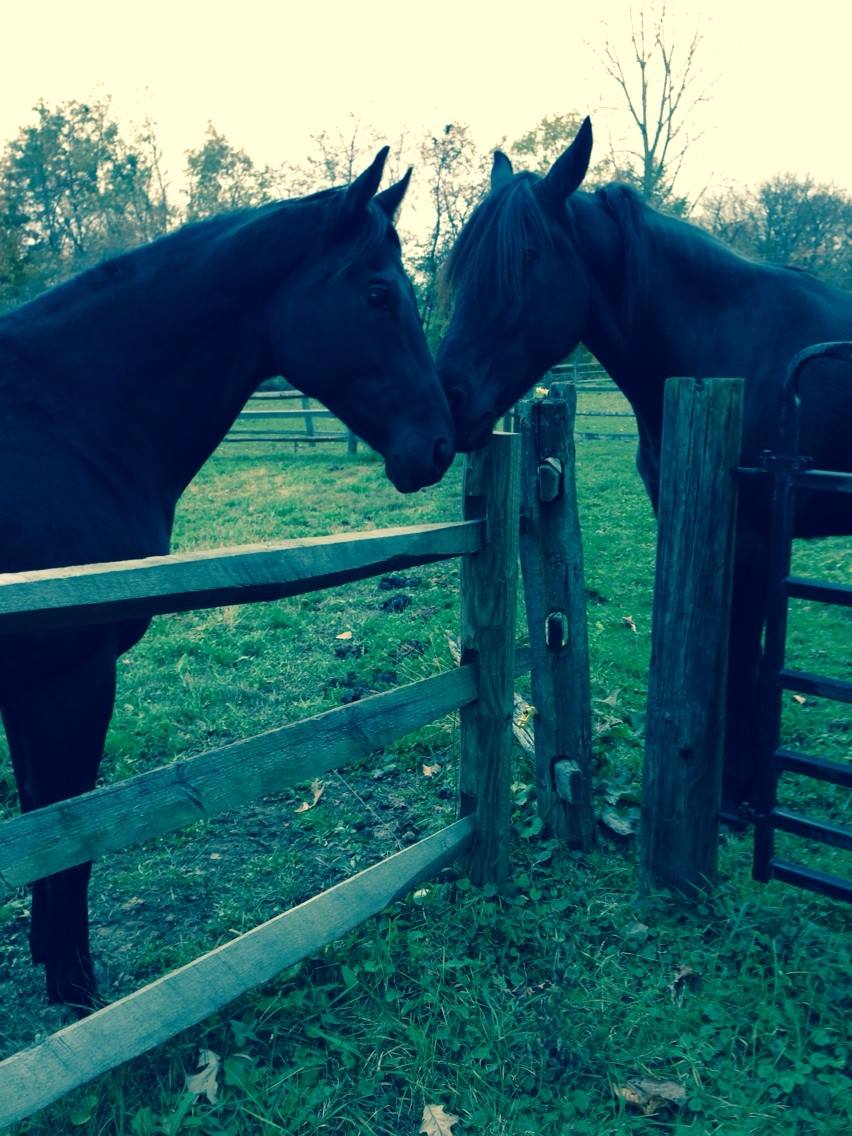
I am not sure how this whole new divergent thread in my life began, but something inside me said, “wouldn’t it be lovely to find a beautiful farm for my husband and I to retire.”  I had a vague notion of reconnecting with horses, but was a bit reluctant to fully tell my husband because of the great responsibility of taking care of these noble friends.  But as life has a will of it own, my longing and life in its own wild ways has opened up a whole new doorway for me to discover how to be more human as well as be in reverent service to life.  With gratitude to the presence of our horse friends,  the old constructs of life are falling away, and my eyes experience Spirit freshly through the Nature of Horse.

Many of us have at some point or another experienced other animals as being inferior to us.  As with the way of things, Human Beings during the last few centuries have learned to dominate and shape the earth for the most part according to what supports our lifestyles and decisions. At this point in the spectrum of time however, many educators, therapists, and coaches are delving into the expanding field of “animal” communication.  It is very exciting at this point of our evolution to re-examine how we can live more closely in mutuality with other creatures for not only their growth, but for ours as well.  It is by re-inserting ourselves back into the web of inter-connection that we can have hope to improve our futures and that of the planet earth.  When we find deeper contact with ourselves, our relationships begin to shift as well.

While I have experienced great joy working with dolphins, lions, tigers, and bears with my work, the spark of my heart is now to bring the great teaching that come from living with the horse to people who are interested in a whole new way of “Self-Discovery”.  I have created a template of belief and movement on the farm to view horses as our “equal partners” on this planet we call our home.  Our retreat here is being planned to open this summer to introduce daily and weekend workshops opening the pathway for learning through “Communicating with the horses.”   Entering the Equine world with  a certain naiveté will change the life of those who have little experience to those who have been riding all their lives.  The more empty the mind of preconceptions, the more possibilities can enter.  Yet,  even if you are the sort that longs to confront and challenge thought, the horses guidance always finds a way to melt your heart and bring a greater depth of understanding to your life.


Massage in Columbus Ohio

Learning about power, intimacy, confidence and independence by playing with horses.


Here on the farm, life shows us a simpler way to live within the balance of life. The horses, when given freedom to experience themselves, offer us new perspectives of life on how to resolve conflicts, to play without inhibition, and to find our own inner authority and leadership skills. In the lack of words, a look… a movement will express exactly what we need to know in the moment.  

If you are feeling drawn to a more “nature” based method of self-discovery…consider befriending the world of horses with us here in Johnstown, Ohio.  We will be offering 1:1 facilitation and also group and herd experiences.  Our retreats will be offered with walking meditation, interface with the horses, touch experiences, and also through developing intuitive understanding of energy dynamics.  If you are interested, as part of the equine therapy process, we will offer touch and bodywork upon request and with certain curriculums.  This is an evolutionary concept where seeds have been planted, and the fruits of the creative process have taken root.  The horses are the teachers and we are the eager students receiving the learning. We are excited to take the journey with you into the world of Horses!

For more information, call:  

Call: 614 653-8111

Based on the teachings of Jackie Stevenson at:  Spirit of Leadership

and what I learned at Tellington TTouch with Linda Tellington.

Rolfing and Structural Integration in Columbus Ohio

Rolfing and Structural Integration in Columbus Ohio

Lately I have been getting calls asking if Structural Integration (SI) work is the same thing as Rolfing®.

So in order to clarify this, I have decided to write a short post on the subject. I hope this helps.

The Rolf Institute for Structural Integration

The Rolf Institute® blossomed as Dr. Rolf’s students began to branch out her work into the community and eventually throughout world. The original pioneers of this work called themselves, “Rolfers®”. The school and all its teachers did a great thing in expanding her education and healing work outward.

As with most types of bodywork however, the work began to evolve and different practitioners created their own new approaches to her foundational template. The next generation of Structural Integration Therapist. Thus, the spread of this craft based on fascial work sprouted new wings and took off in different directions.

Currently, there are many schools, some who keep with the original 10 series as Dr. Ida Rolf taught, and others with different formulas. These new practitioners call themselves “Structural Integration” Therapists because they attended the newer schools  Also, the “Rolf®” name belongs to the Institute. But- what is similar is that all Structural Integration is originated from the original 10 series. The goal is to create better structural alignment and functioning and ease of movement for the clients.

Ida Rolf’s teaching

She found much success in this Structural Integration work because of the its wonderful ability to re-organize the connective tissues in the body which envelopes and contains all the working muscles, organs and just about everything within. Dr. Rolf established her 10 series “recipe” to be the foundation of this work to address the body from a superficial level to down deep in the core of the body. By focusing on a certain area of the body each session, the body learned how to let go of certain dysfunctional patterns from one week to the other, until they whole body began to relate to itself in a very new way without the habitual stresses from before. This is the whole of integration.

At Lighten Up Therapies in Columbus Ohio and Johnstown, Sharon Hartnett practices Structural Alignment with the basic 10 series as originally taught by Dr. Ida Rolf. She works with the same idea of moving from superficial to deeper, but now with a lighter touch. Communication is key with an ongoing dialogue to make sure the client is comfortable and able to move through the changes well. Connective Tissue massage (fascial work) is beneficial too and may be requested also in hourly sessions. It’s also helpful for people who want to continue their manual therapy on a regular basis.

There are different schools out there and “fascial” work seems to have taken root and is now being taught in regular massage schools. If you are interested though in the “original” series, make sure you ask to see if the work is the same. There are many Structural Integration Practitioners such as Sharon who have not veered off the original intent and have helped clients discover positive change. Dr. Ida Rolf created her work a certain way based on years of experience with great results. The recipe works!

Wishing you the best of finding the best Structural Integration Therapist for you in your area

* This is based on my opinion after  conversations with other Structural Integrations who have studied at a variety of schools.  If there are other opinions, please add to my blog.

Sharon Hartnett CST-D

Worthington, Ohio|Serving the Columbus Area

614 653-8111

To find out more about Structural Integration or Craniosacral Therapy, check out my main page.


structural integration columbus

Sharon Hartnett CST-D

Worthington, Ohio|Serving the Columbus Area

614 653-8111

To find out more about Craniosacral Therapy, check out my main page.

Equine Therapy

Equine Therapy

Getting Ready for my Fourth Training in Coaching with Equine Therapy

It’s been an exciting journey learning how to work as a Coach for people interested in learning leadership skills by sharing space with horses.  At the Spirit of Leadership https://www.spirit-of-leadership.com program, I have had the opportunity to find new ways to help shape my program that will be starting in Columbus Ohio in the summer of 2014 to support people wanting to move in the direction of self-discovery, deepening into healthier relationships, walking a spiritual path and wanting to integrate all of this into their daily lives.  By experiencing and observing the “way of the horse”, we can be taught so much on how to embody our strengths and live by our values in a meaningful way.

In our last module we set up an obstacle course with the intention of finding a way to move through our own personal and group blocks in order to release whatever stood in our way.  Each group set up their unique configuration and we all worked together to find a way to creatively use all of our qualities and efforts to transverse what was set in front of us. It was fun, spontaneous, and effortless when we dropped our judgments and learned to move together as a cohesive unit.  Not only did we grow in our human relationships, but the wisdom of the horses mirrored back to us where we needed to go to make our objectives become real. We were able to gain insight in our minds, as well as with a full body inter-related sense of the movement.

As a licensed Massage Therapist, a dedicated healer facilitator and educator, and a Hakomi Practitioner, it has been wonderful to bring the aspect of Nature and Horses into the Healership. I have found that by working with either one horse or many, that a certain magic takes place in how healing information is brought into our full bodied consciousness.  Nothing brings me more pleasure than to be in service to the evolution of each person, sentient being and every aspect of Nature.  It is with the Sacred movement between earth and spirit that we find truth and meaning in our lives.

I am looking forward to the next summer to coach with some of the Tellington Touch work I have learned, and in helping individuals, and groups to trust and grow from the deeper intelligence of life through contact with the horses and their herd.

Equine Therapy

Wisdom of the Horse

Warmly,

Sharon Hartnett LMT

Johnstown and Worthington, Ohio