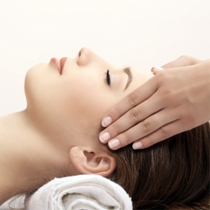
Massage in Columbus and Grounding
Often people will speak about grounding and yet there is no great definition for what that means.
How do you interpret “Grounding”? Is it a thought? Is it a feeling or a sensation?
If you are looking for support, look toward Craniosacral Therapy!
Sharon Hartnett CST-D
703 509-1792
Columbus, Ohio
You have come to the right place. Sharon Hartnett LMT has over 17+ years doing Structural Integration Therapy. In the late 1990’s she found a local Rolfer in Mclean, Virginia who introduced her to the 10 series. She fell in love with the positive postural changes and increased movement in her body that she decided to study Structural Integration herself. She has been providing SI sessions with clients ever since.
Learn how Structural Integration Developed
Dr. Ida P. Rolf, a pioneering biochemist began to develop Rolfing in the 1930s after suffering from spinal arthritis. The direction of her work was focused on the role of fascia and unwinding tension patterns around muscles and joints in order to release pain and discomfort. While working in the 1960’s teaching her fascial work at the Esalen Institute in California, the term “Rolfing” was coined. Her original thinking and experience of manipulating the connective tissue brought students from around the world. She taught these practitioners how to support the body to function efficiently so that the force of gravity could flow through and support both the form and functioning. Soon later, the Rolf Institute was found. And as with most great work, different schools have branched out, extending the original work with same intention and yet with individualize perspectives.
Why Structural Integration Therapy?
Structural Integration is a system of bodywork that will encourage the body back into alignment and structural integrity. Clients walk away feeling more freedom in their movement, a sense of lightness, greater flexibility, relief from chronic pain and more energized. The Structural Integration model views the person as a whole that is self-regulation and self-organizing. Between sessions, clients are given exercises to help them continue their work out into the world. the body knows where it needs to go in order to find maximum motion. It just needs to be re-edcuated how to do that so it can relate more optimally in fluidity. After 10 sessions, clients take time to allow the work to continue and integrate with better posture.
Is Structural Integration Uncomfortable?
When you go to visit any type of bodyworker and therapist, it is a good idea to communicate your needs right from the start. The therapist has tools and experience working with clients, but ultimately the client benefits the most by expressing what his/her level of tolerance to pressure. Each person is unique in how they like to be touched. What Sharon does is ask, “If you can feel the sensations and feelings that arise during the session without having to tighten or react, than allow yourself to do that. However, if anything hurts or feels like it is too deep, please say “stop” or “lighten up”. The client’s wishes are always respected. With this said, often the fascia has historically tightened up in areas of the body around dysfunctional patterns. There are time when that tissue is lengthened it will be uncomfortable. Most clients though are so happy with the results and reconnection to their body’s that they return over and over with relief and commitment to themselves.
Sharon Hartnett CST-D
Worthington, Ohio|Serving the Columbus Area
614 653-8111
To find out more about Structural Integration or Craniosacral Therapy, check out my main page.
Premenstrual Syndrome (PMS) affects a great number of woman. For each person, the commencing wave of hormonal changes during the start of ovulation cycle brings a different experience, but what many women find in common is the predictable pattern of mood swings, food cravings, tender breasts,loss of libido, irritability and depression. Let’s face it, PMS doesn’t make a happy few days for the woman going through these swings nor for the people around her.
Nothing has been proven to completely eliminate all of the symptoms of PMS, but there is help. One of the things I recommend is an Aromatherapy Massage. There are essential oils that can be very balancing and comforting during these sensitive times. Depending on whether the moods or symptoms are weepy or angry, bloated or low in energy, a formulated mix can be designed for you. Some of the oils that may be used are: Grapefruit, Rose, Chomile, Nutmeg, Clary-sage, Bergamot, Geranium and Dragon Time™. If you have a Licensed Massage Therapist who has some background in Aromatherapy, call in advanced to see if she can create a unique blend for your symptoms. During the massage, the essential oils can be massaged into your abdomen, lower back, buttocks, chest and hips to relieve discomfort.
One of my favorite blends that clients often like is Dragon Time™. I order it through Young Living Oils, a company selling high grade therapeutic oils. Dragon Time™is a blend of calming and soothing essential oils, including clary sage, which contains natural phytoestrogens, estrogen-like chemicals found in plant foods such as beans, seeds, and grains. It also contains the following oils which are very balancing: Fennel (Foeniculum vulgare), lavender (Lavandula angustifolia), marjoram (Origanum majorana), yarrow (Achillea millefolium), and jasmine (Jasminum officinale).

Alleviating PMS symtoms.
Clients often feel much more relaxed and stable after an aromatherapy massage.
Other strategies that may help relief the stress of PMS:
While Premenstrual Syndrom is part of life, don’t let it stop you in your tracks. Self-care and attention can only help.
For more information on Aromatherapy Massage in Columbus Ohio, call Sharon Hartnett at: 740 966-5153