614 653-8111 Sharhartnett@aol.com
Somatic Touch with Intention Creates a Unique Environment for Healing|CST

Somatic Touch with Intention Creates a Unique Environment for Healing|CST
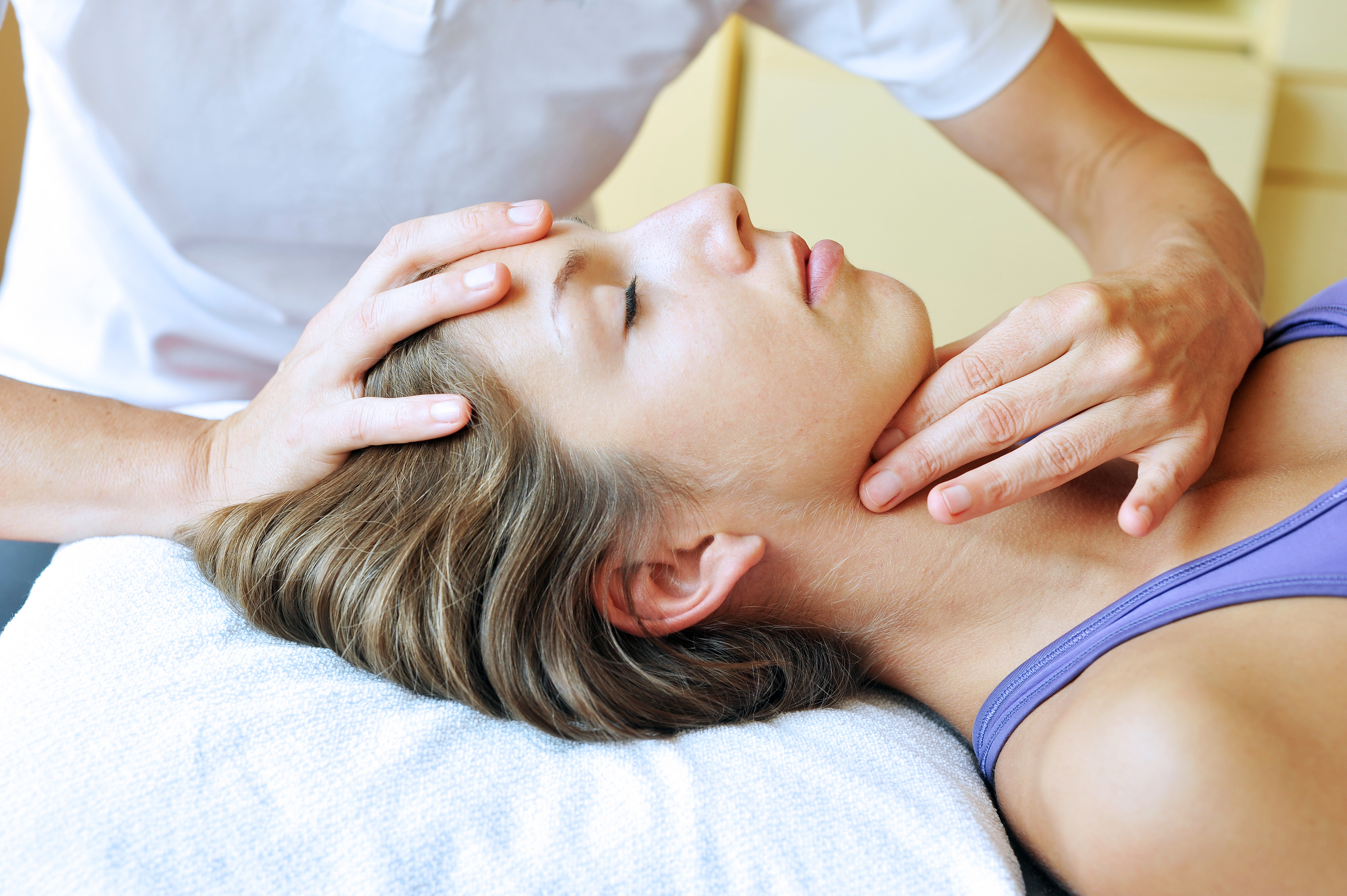
craniosacral therapy with gentle touch

 Trusting your body again

Written by Sharon Hartnett|Diplomate Craniosacral Therapist working in the Columbus, Ohio area.

Healing is all about receiving gentle  caring input into a system that has been disrupted.

We are animals with highly complexed centralized brains and spinal cords. As people- we have the added benefit of myelinated axons for the fast transmission of information from our brain to our bodies and our bodies to our brain. Electrical impulses-when strong enough- transport any information with the help of chemical neurotransmitters to axon terminals.  We are super highways of light and frequencies processing all the time.  Our brains and spines stay very busy in response.  Given the right circumstances, they can be turned back on to expedite the healing process.

When we are faced and fall into human life pain and/or trauma, this efficient system of ours often breaks down through over activating the sympathetic and inhibiting the parasymathetic.  This can lead to intense anxiety, hyper-vigilance, emotional numbness, exhaustion, and structural brain changes that favor fear response over logical, present-moment processing.

When a threat is overwhelming, the nervous system may shut down. This causes numbness, dissociation (detachment from the body/emotions), and feelings of being trapped or powerless.  The brain can fail to regulate emotions well.

This is why Craniosacral Therapy (CST) takes a very gentle and patient approach to healing the body. By using a very light touch and specific techniques we build a more deeply trusting relationship with the body again.  All the signals which have previously been shut down or set in patterns of dysregulation  can be reprogrammed so to speak through the rebuilding of trust in the mind body connection.  By correcting misalignments, or blockages, CST facilitates the natural, rhythmic flow of cerebrospinal fluid (CSF), which cushions the brain and spinal cord, delivers nutrients, and removes waste.

The best way to help free up and nourish the body is by being in presence in a non-invasive approach.  We want to normalize the mind body through the inner intelligence within by creating a safe environment to relax, destress and come back to Self with ease.  Our bodies most often know what needs to be done and will change accordingly when the body shift from fear to ease.

During sessions, sometime people don’t feel very much.  Others do-quite a bit.  Either way, as the peaceful melding connection deepens the nervous sytem begins to re-organize.  Some people may get up off the table and be very relaxed.  I have often heard people say they haven’t felt such ease in years!

When the body is more rested, and at ease-naturally it heals from long-term traumas more easily.

The combination of trust and gentleness, with skill-set creates a secure environment that fundamentally transforms the healing process, allowing the nervous system to shift from a state of high alert to one of rest, which is essential for repairing the body and mind.

Sharon Hartnett

Upledger Trained and Certified at the Highest Level

615 763-8111

www.craniosacraltherapistcolumbus.com

Return to a Regulated Nervous System

Return to a Regulated Nervous System

Your Body Can Change Its Stress Response through Regulation

craniosacral near me in Columbus Ohio

Find Centered Regulation Inside

We can return to regulation inside our body through mindfulness and healthy feedback.  To move toward equilibrium, it is helpful to find a craniosacral therapist who knows how to balance, and bring symmetry, quality, amplitude and a healthy rate back to the craniosacral system.

Through inviting change by melding with the body- we can discover our authentic self and essence.  When stress disappears, we become more present.  More real.

Have you ever met people who seem very centered and can deal with lifes up and downs easily?

Craniosacral Therapy can help us all find this experience.

When our body needs a new pathway to healing, a gentle nudge is all we need.  

Sharon Hartnett CST-D

614 653-8111

www.craniosacraltherapistcolumbus.com


The Importance of Facing Pain and Suffering in Order to Heal

The Importance of Facing Pain and Suffering in Order to Heal

Facing Your Pain and Suffering

Why Facing Pain and Suffering Is Essential for Healing and Growth

Pain and suffering are part of being human. Yet many people spend years trying to avoid them. We distract ourselves. We push through. We numb. While this can help short-term, avoiding pain often makes it last longer.

Facing pain—physical, emotional, or psychological—is a necessary step toward real healing and long-term well-being.

Pain is Information. Not Failure

The way that our bodies signal that something is off is usually through pain.  It helps us to pay attention.  Physical pain shows us our biological history.  It can point to injuries that have not healed, illness,  nervous system dysregulation,  or burnout.  Emotional pain may be related to old trauma stories left unresolved,  and unmet needs.

Early Attention can help us avoid Chronic Conditions.

Believe it or not, staying positive is not the way to health.  Often people bypass the valuable information that pain speaks.  The sooner you address pain signals-the better off you are.

Avoidance Can Keep You Stuck

Many people ignore or push pain away. In reality, avoidance often leads to:

  • Chronic tension or inflammation

  • Anxiety and depression

  • Repeated patterns in relationships

  • Fatigue and loss of motivation

When pain is suppressed, it doesn’t disappear. It shows up in other ways.

Facing suffering does not mean dwelling on it. It means acknowledging what is present so change can occur.

In my practice in Worthington, Ohio, I often work with people who wait too long to move onto an active healing path.  But I’d like to let you know that staying present and in charge of your wellbeing is an empowering step.  Facing pain and suffering helps you to respond more powerfully on a path of ease.  We have less compensations, and  more simplicity is taking the courageous steps to address what is here.

Take the time to get grounded and take care of your health and wellbeing.

Sharon Hartnett CST-D

614 653-8111

www.craniosacraltherapistcolumbus.com

Ankle Freedom, Upright Posture: A Craniosacral Perspective on Neck Health — Columbus Insights

Ankle Freedom, Upright Posture: A Craniosacral Perspective on Neck Health — Columbus Insights

Craniosacral Approach: Ankle Mobility for Better Posture & Neck Health in Columbus

After 30 years of being a craniosacral therapist and doing integrative types of bodywork,  it dawned on me how very important it is to free up the ankles in order for the neck to do the same.


A Bit about the Fascial System

The fascial system forms a continuous integrated architecture that literally connects your feet to your head.  Working with this seamless three dimensional connective tissue network beginning at the ankles and feet can make a huge difference in how you feel and move in your body.  It also directly affects the neck and it’s ability to sidebend, rotate and move in various directions.

Fascia is a seamless three dimensional connective tissue network that envelopes muscles, bones, organs, nerves and vessels.  It allows global integration and force transmission.  It is the medium through which all of life dialogues in my opinion.

In any case, recently what I have been noticing is that people who come in with neck issues, usually have a tightness in their lateral line.  That begins at the peroneous muscles and goes up through the glutes, transferring possible tension up into the SCM muslces and such.  Often this can lead to pain with headaches and migraines. There has to be efficient flow and communication from the head to the body, and the body to the head through the thoracic inlet.

Secondly, the plantar fascia and posterior needs to be considered as it deals with the arch and  gait for walking and movement.

We have other lines too from the toes which run up to the pelvis to the head as well.  So many relationships with which to work in order to restore better mobility and posture.

Your Goals with Craniosacral Therapy for your Health

The neck may be your weakest link.  You may come in with neck pain, and issues like migraines, headaches, and tinnitus.  You may believe that you need only local massage to release pain.  But this is NOT a local muscle problem.

With Craniosacral Therapy, we approach the whole body. As a Structural integration Therapist I look at the whole body. The reason is- every movemenet we make is about interconnected patterns.  What brings about optimal health and motion is addressing all the parts and patterns which add up to the whole.

As a somatic therapist, I know that you want to be feeling your best. I have to say though that most times, working only on the neck won’t bring you long term relief.  Everything needs to change to create better order and integration.

Whole body attention is much more comprehensive and effective.  You deserve to come in for treatments and to have your goals reached which most often are pain relief and better motibility. It is true that the neck probably needs a lot of attention, but the  thoracic inlet, head and everything down to your ankles and toes does need to be included  too in most cases.

My Goals for You with Craniosacral Therapy

First of all, my goal is whatever your goal is for yourself.  Each Craniosacral Therapy treatment is based on how your body communicates through the craniosacral system.  Bodies know how to move into the direction of healing, and I have faith in that dynamic to lead the session. In addition, I visually check your fascial alignment, and feel for twists, turns or any irregularities.  I treat based on what you and your body are telling me.  Each session is unique, as it should be as each person has their own way of developing and holding posture.

I find that by trusting the body’s communication and presnetation of patterns is the most effective way to treat.

Something I would like to invite you to do at home.

If your neck tightenss is  bothering  you, lie on the floor and feel how your neck and feet position themselves.  Are they even when you look?  Flexing your feet and pointing them, are you tight or do you move freely.  Can you move your feet from right to left and left to right with ease?  When you stand up, can you lift your toes? Do you stand on each side of your heal and the balls of your feet with balance.  What do your arches look and feel like?  Use your imagination and try to move your feet in many different planes of movement and see  what is limited and what is not.

After about 5 minutes of testing.  Get back on the floor.  Breathe in for 4 and out for 6.  Check in with your body and see how it feels after just the test. Do your ankles feel better?  Your neck.  Make a practice of finding ways to increase your mobility.

With Craniosacral Therapy, the motion tells me everything.  On a deeper level, I listen to what the fluids and nervous system show me.  I will help the body find alignment, and release tensions.  Even more powerful is helping you to center and integrate new changes that give you more freedom in your body.

My message to you is that everything is interconnected in regards to your posture. Your fascia and the Craniosacral System are key to releasing dysfunctional patterns.  However long it took you to get into a pain pattern- be patience and take your time to heal, and get well again.  You deserve Seslf-Care!

Sharon Hartnett CST-D

614 653-8111

To learn about my Craniosacral Therapy services, visit my main page here


What a Craniosacral Therapist in Columbus Really Does

What a Craniosacral Therapist in Columbus Really Does

Craniosacral Therapist Columbus

 🌿 What a Craniosacral Therapist Does|Human Connection


Listening Beyond Words

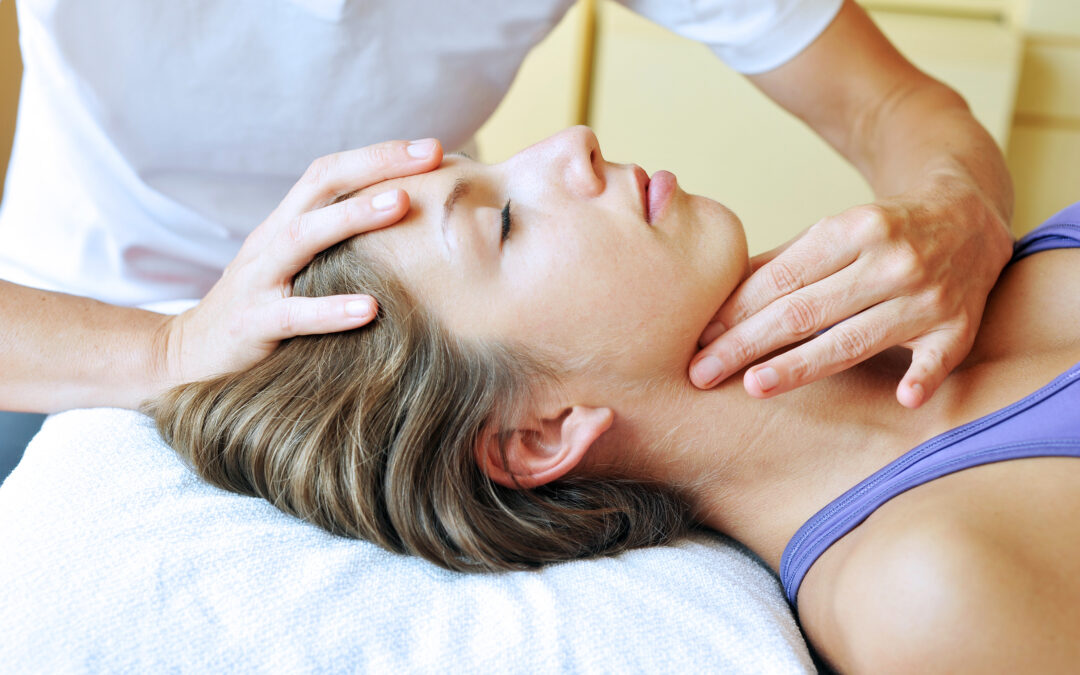
A craniosacral therapist in Columbus, Ohio supports healing through both presence and technique. This is not energy work—though energy often shifts as the body releases and reorganizes. Instead, it is hands-on, gentle work guided by deep listening. The focus is the Cranosacral System.

With finely tuned sensitivity, a craniosacral therapist feels the craniosacral rhythm—a subtle wave created by the movement of cerebrospinal fluid. This rhythm carries vital information about the body’s state of health and balance.

How Craniosacral Therapy Works with Bones, Fascia, and Fluids

Craniosacral therapy involves gently connecting with the bones of the cranium, spine, and sacrum. By following the body’s cues rather than forcing change, the therapist helps free restrictions that limit fluid motion and structural balance.

Fascia—the connective tissue that weaves throughout the body—softens and responds. Cerebrospinal fluid begins to move more freely. Ligaments surrounding the organs may also gain more space when nearby restrictions release, improving flow and ease in the whole system.

Supporting the Body’s Natural Correction Through Craniosacral Therapy

The focus of craniosacral therapy is always the craniosacral rhythm. By releasing restrictions that interfere with its expression, the body naturally finds better balance. Sometimes this work also reduces strain around the lungs, heart, or organs—not by directly treating those rhythms, but by removing barriers so the body can self-correct. The tissues recognize this freedom as nourishment, allowing release and deeper integration.

Craniosacral Therapy is not only about releasing pain or easing restrictions. It’s about bringing resonance back into the body, creating space for the nervous system to reset, and supporting the deep human need for connection and healing.

Benefits of Seeing a Craniosacral Therapist in Columbus, Ohio

When tissues are freed and the craniosacral rhythm moves more easily, the body can:

  • Release tension and long-held restrictions

  • Improve nervous system regulation and resilience

  • Support organ function by easing strain in surrounding structures

  • Encourage natural balance in the musculoskeletal system

  • Integrate changes so shifts hold more deeply over time

  • Deepen a sense of inner calm, presence, and wholeness

A Different Kind of Healing Relationship

Craniosacral therapy is not about doing to the body, but listening with it. By creating resonance and supporting the body’s innate intelligence, a craniosacral therapist in Columbus, Ohio helps restore motion, balance, and health. Where there is motion, there is life.

Sharon Hartnett Craniosacral Therapist Serving the Columbus Area

614 653-8111

To learn about my Craniosacral Therapy services, visit my main page here.

Why Self-Care Matters—Now More Than Ever

Why Self-Care Matters—Now More Than Ever

self care

Self-Care with Cranosacral Therapy by Sharon Hartnett CST-D in Columbus, Ohio

In today’s fast-paced world, stress and anxiety are more prevalent than ever. The constant demands of work, family, and digital life can leave us emotionally drained and physically exhausted. For individuals in chronic pain, this cycle can become especially punishing—where pain fuels stress, and stress fuels pain.

Cultivating a self-care routine isn’t just a luxury—it’s essential care. For those juggling stress, anxiety, or chronic pain, self-care can:

  • Break the stress-pain cycle, calming the nervous and working with the fascial and musculoskeletal systems.  

  • Improve mood, sleep, and resilience through regular relaxation and mindfulness practices. HealthWikipedia

  • Boost quality of life—especially critical for those managing long-term health challenges. 


Key Self‑Care Practices for Stress, Anxiety & Pain

1. Mindfulness & Meditation

  • What it does: Lowers anxiety, enhances emotional regulation, reduces chronic pain signaling. HealthTIME

  • Try this: Five minutes of mindful breathing daily, or guided meditations via apps.  Or take a mindful walk outside!

2. Progressive Muscle Relaxation (PMR)

  • What it does: Reduces muscle tension, anxiety, insomnia, even chronic pain.

  • Try this: Tense and release muscle groups from head to toe, with deep breathing.  Take your time!

3. Gentle Movement (Yoga, Walks, Stretching)

  • Encourages physical ease, mental clarity, and helps interrupt chronic pain patterns.

4. Craniosacral Therapy (CST)

There are Craniosacral Therapists across the world who work with people to deeply relax and to heal.  Check out the Upledger Institute for a therapist near you.

5.  Journal, Express Yourself in Safe Places, and Be Social


✨ Spotlight: Craniosacral Therapy

What it is
A gentle, hands-on approach where a trained therapist uses soft touch along your skull, spine, and sacrum to ease tension in the fascia and support the body’s self‑healing mechanisms. Byrdie+3Cleveland Clinic+3Verywell Health+3

How it helps

What to expect

A balanced view

Craniosacral Therapy is a unique experience for each person.  The body holds the wisdom to heal and that Inner Physician is what leads the session.  As such, you can depend that your sessions are different than other peoples.  However, most people walk away feeling very calm, centered and relaxed in their mind, body and spirit.


Building Your Self‑Care Toolbox

Here’s how to create a well-rounded routine:

Practice What It Does Frequency
Deep breathing or meditation Calms nervous system, reduces anxiety Daily, 5–15 min
PMR stretch session Eases muscle tension, pain, insomnia 3–5× per week
Gentle movement Improves circulation, mental health Daily or most days
Craniosacral therapy Releases chronic tension; resets pain/stress Weekly or biweekly
Journaling/social connection Processes emotions; strengthens support Weekly

Final Thoughts

Self-care isn’t about indulgence—it’s about repairing and protecting your system.   Be Proactive !When you feel your stress or pain rising, lean on these practices before symptoms spiral. Over time, small, consistent habits build a powerful buffer against the daily overload.

If you’re struggling, especially with chronic pain or anxiety, consider adding craniosacral therapy to your routine. Consult your healthcare provider and seek out a trained practitioner. Combined with mindfulness, relaxation, and movement, CST can become a gentle yet potent path toward relief and resilience.


Reminder

Everyone’s journey is different—take time to explore what resonates with you. Consistency beats intensity. Start small, stay curious, and let your routine grow alongside your needs.

Take care of yourself—you’re worth the effort. 💛

Sharon Hartnett CST-D

614 653-8111

To learn about my Craniosacral Therapy services, visit my main page here