(614) 653-8111 Sharhartnett@aol.com
Somatic Touch with Intention Creates a Unique Environment for Healing|CST

Somatic Touch with Intention Creates a Unique Environment for Healing|CST
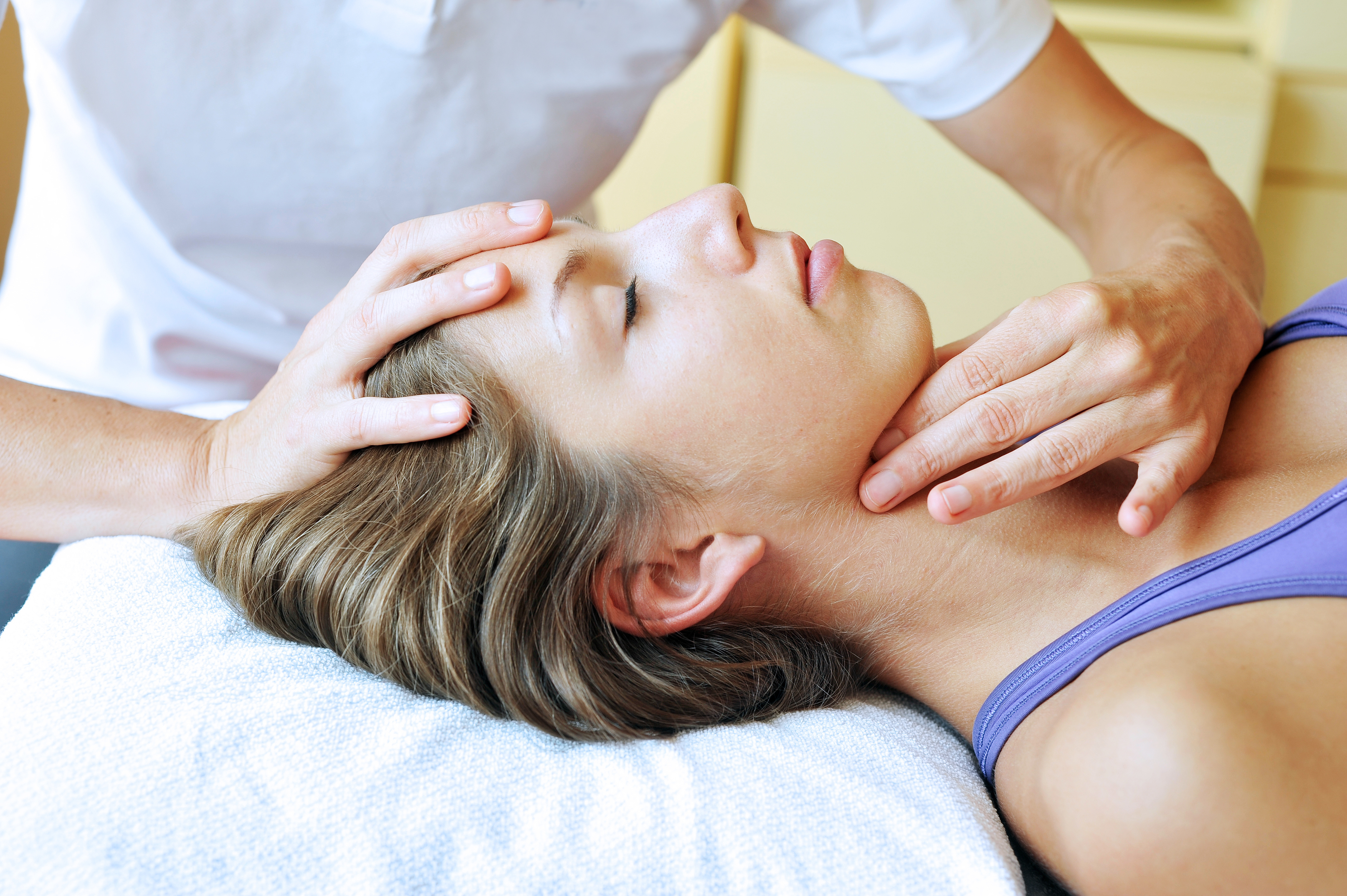
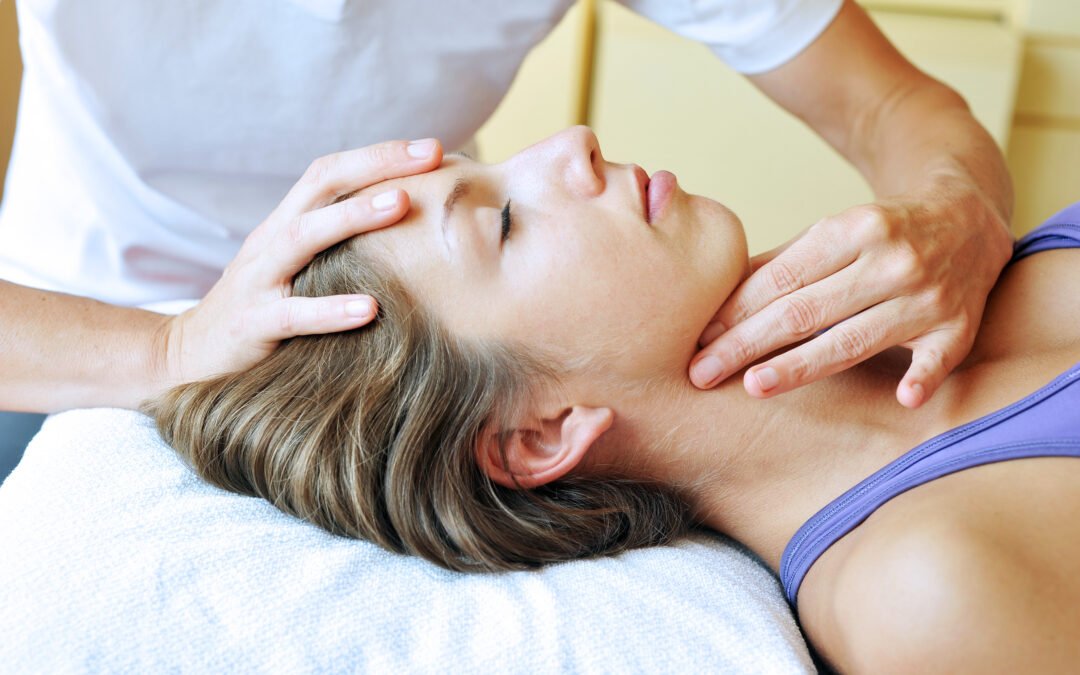
craniosacral therapy with gentle touch

Trusting Your Body Again

By Sharon Hartnett, Diplomate Craniosacral Therapist, Worthington — serving the Columbus, Ohio area

Healing is all about receiving gentle, caring input into a system that has been disrupted.

We’re animals with highly complex, centralized brains and spinal cords. As humans we have the added benefit of myelinated axons for fast transmission of information from brain to body and body to brain. Electrical impulses, when strong enough, carry that information with the help of chemical neurotransmitters to the axon terminals. We are superhighways of light and frequency, processing all the time. Our brains and spines stay very busy in response. Given the right circumstances, they can be switched back on to speed the healing process.

When we run into pain or trauma, this efficient system often breaks down — the sympathetic nervous system over-activates and the parasympathetic is held back. That can lead to intense anxiety, hypervigilance, emotional numbness, exhaustion, and structural brain changes that favor a fear response over logical, present-moment processing.

When a threat is overwhelming, the nervous system may shut down altogether. That brings numbness, dissociation (detachment from the body and emotions), and feelings of being trapped or powerless. The brain can lose its ability to regulate emotion well. I write more about trauma-informed, body-centered healing on its own page.

This is why craniosacral therapy takes such a gentle, patient approach. Using very light touch and specific techniques, we rebuild a deeply trusting relationship with the body. The signals that were shut down or stuck in patterns of dysregulation can be reprogrammed, so to speak, by restoring trust in the mind-body connection. By correcting restrictions and blockages, craniosacral therapy supports the natural, rhythmic flow of cerebrospinal fluid, which cushions the brain and spinal cord, delivers nutrients, and removes waste. I explain the mechanics in What Does Craniosacral Therapy Do?

The best way to free up and nourish the body is presence, in a non-invasive approach. We want to normalize the mind-body through its own inner intelligence by creating a safe environment to relax, de-stress, and come back to Self with ease. Our bodies most often know what needs to be done, and they change accordingly once they shift from fear to ease.

During sessions, some people don’t feel very much. Others feel quite a bit. Either way, as the peaceful melding connection deepens, the nervous system begins to reorganize. Some people get up off the table deeply relaxed. I’ve often heard people say they haven’t felt such ease in years. The one thing I ask is patience — deep healing unfolds gradually.

When the body is rested and at ease, it heals from long-term trauma more easily.

The combination of trust and gentleness, backed by real skill, creates a secure environment that fundamentally transforms the healing process — letting the nervous system shift from high alert to rest, which is essential for repairing body and mind.

Ready to feel better? I’m Sharon Hartnett, a Diplomate-Certified Craniosacral Therapist (CST-D) through the Upledger Institute, with about 30 years of experience listening to the body and helping it heal. My office is in Worthington, Ohio, and I serve the greater Columbus area.

If you’re curious whether this gentle work is right for you, I offer a free 15-minute phone consultation. Call or text me at (614) 653-8111.

Learn more about craniosacral therapy in Columbus, read answers to common questions about craniosacral therapy, or find out how to choose the best craniosacral therapist for you.

Chronic Pain Relief in Columbus, Ohio

Chronic Pain Relief in Columbus, Ohio

Chronic Pain Relief Columbus Ohio

If you’re living with chronic pain and you’re in Columbus or Worthington, I want to say this first: pain isn’t the problem. It’s a signal.

Most people try to push through pain or ignore it. Some rely on medication to get by. Sometimes that helps short-term. But chronic pain usually doesn’t resolve that way. It gets stored in the body. Over time, things tighten, movement changes, and the pain becomes part of daily life.

What actually helps is learning how to listen to the body and meet the pain in a way that is right for you.

Why Somatic Work Helps Chronic Pain

I’ve worked with people in pain for nearly 30 years. What I’ve seen again and again is that chronic pain doesn’t just live in muscles or joints. It lives in the nervous system, the fascia, and the tissues themselves.

This is where somatic work—like craniosacral therapy, gentle bodywork, or Hakomi-informed approaches—can make a real difference. Instead of forcing change, we meet what’s there and allow the body to respond.

Medication can dull pain. Somatic work helps the body reorganize so the pain doesn’t need to stay.

Pain Is Different for Everyone

There isn’t one kind of chronic pain. Everyone carries it differently. Body structure, stress, emotional history, and past injuries all play a role.

That’s why I don’t follow a formula. In my practice in Columbus and Worthington, I meet each person where they are. The body tells the story. My job is to listen. Most of the work is listening and gentle touch, but sometimes I do go deeper at points if that is what the body calls for. For some people, I will refer out if they need a wonderful massage therapist. One I recommend locally is Mia Mogavero. If I feel someone needs more active motion, I’ll add to the healing team and highlight people like Kelsey at Shift Motion. She offers great pilates classes which can help get movement, balance and strength in alignment. I am always looking toward my client’s real needs first.

Listening Changes Everything

Especially in the beginning, it can be important to talk about the pain—how it started, what it feels like, what makes it worse or better. Pain wants to be acknowledged.

After that, I listen more with my hands than with words. I follow the tissues, the fluids, and the subtle movements in the body. Over time, the body begins to show us what it needs.

Some people like quiet sessions. Others need to talk. Both are fine. There’s no right way to heal.

Chronic Pain Is Often Old Pain

Most long-term pain isn’t just about what’s happening now. It’s layered. Old injuries. Old stress. Sometimes old trauma.

Earlier in my career, I worked more assertively through Structural Integration. Change often happened quickly. Now I work mostly with craniosacral therapy. It’s gentler. Slower. Built on trust. For many people, it leads to deeper and more lasting relief.

When Trauma Is Part of the Picture

Some people don’t feel much in their bodies at all, especially if they learned early on to disconnect to survive. In those cases, we go slowly. Sometimes touch isn’t the starting point. Sometimes it’s simply sitting, listening, and establishing safety.

Healing doesn’t need to be forced.

Restoring Movement and Ease

The body is meant to move. Every tissue has its own rhythm. Chronic pain often shows us where that movement has been restricted—commonly in the neck, the cranial base, or the fascia.

When those areas are supported with care, things can soften. Movement returns. Pain often settles on its own.

The Way Through Chronic Pain

Pain isn’t something to fight. It’s information. It’s asking for attention and support.

If you’re looking for chronic pain relief in Columbus or Worthington, Ohio, my approach is gentle, respectful, and led by your body. You’re always in charge. We move at your pace.

Sharon Hartnett CST-D
(614) 653-8111
www.craniosacraltherapistcolumbus.com

Ankle Freedom, Upright Posture: A Craniosacral Perspective on Neck Health — Columbus Insights

Ankle Freedom, Upright Posture: A Craniosacral Perspective on Neck Health — Columbus Insights

Craniosacral Approach: Ankle Mobility for Better Posture & Neck Health in Columbus

After 30 years of being a craniosacral therapist and doing integrative types of bodywork,  it dawned on me how very important it is to free up the ankles in order for the neck to do the same.


A Bit about the Fascial System

The fascial system forms a continuous integrated architecture that literally connects your feet to your head.  Working with this seamless three dimensional connective tissue network beginning at the ankles and feet can make a huge difference in how you feel and move in your body.  It also directly affects the neck and it’s ability to sidebend, rotate and move in various directions.

Fascia is a seamless three dimensional connective tissue network that envelopes muscles, bones, organs, nerves and vessels.  It allows global integration and force transmission.  It is the medium through which all of life dialogues in my opinion.

In any case, recently what I have been noticing is that people who come in with neck issues, usually have a tightness in their lateral line.  That begins at the peroneous muscles and goes up through the glutes, transferring possible tension up into the SCM muslces and such.  Often this can lead to pain with headaches and migraines. There has to be efficient flow and communication from the head to the body, and the body to the head through the thoracic inlet.

Secondly, the plantar fascia and posterior needs to be considered as it deals with the arch and  gait for walking and movement.

We have other lines too from the toes which run up to the pelvis to the head as well.  So many relationships with which to work in order to restore better mobility and posture.

Your Goals with Craniosacral Therapy for your Health

The neck may be your weakest link.  You may come in with neck pain, and issues like migraines, headaches, and tinnitus.  You may believe that you need only local massage to release pain.  But this is NOT a local muscle problem.

With Craniosacral Therapy, we approach the whole body. As a Structural integration Therapist I look at the whole body. The reason is- every movemenet we make is about interconnected patterns.  What brings about optimal health and motion is addressing all the parts and patterns which add up to the whole.

As a somatic therapist, I know that you want to be feeling your best. I have to say though that most times, working only on the neck won’t bring you long term relief.  Everything needs to change to create better order and integration.

Whole body attention is much more comprehensive and effective.  You deserve to come in for treatments and to have your goals reached which most often are pain relief and better motibility. It is true that the neck probably needs a lot of attention, but the  thoracic inlet, head and everything down to your ankles and toes does need to be included  too in most cases.

My Goals for You with Craniosacral Therapy

First of all, my goal is whatever your goal is for yourself.  Each Craniosacral Therapy treatment is based on how your body communicates through the craniosacral system.  Bodies know how to move into the direction of healing, and I have faith in that dynamic to lead the session. In addition, I visually check your fascial alignment, and feel for twists, turns or any irregularities.  I treat based on what you and your body are telling me.  Each session is unique, as it should be as each person has their own way of developing and holding posture.

I find that by trusting the body’s communication and presnetation of patterns is the most effective way to treat.

Something I would like to invite you to do at home.

If your neck tightenss is  bothering  you, lie on the floor and feel how your neck and feet position themselves.  Are they even when you look?  Flexing your feet and pointing them, are you tight or do you move freely.  Can you move your feet from right to left and left to right with ease?  When you stand up, can you lift your toes? Do you stand on each side of your heal and the balls of your feet with balance.  What do your arches look and feel like?  Use your imagination and try to move your feet in many different planes of movement and see  what is limited and what is not.

After about 5 minutes of testing.  Get back on the floor.  Breathe in for 4 and out for 6.  Check in with your body and see how it feels after just the test. Do your ankles feel better?  Your neck.  Make a practice of finding ways to increase your mobility.

With Craniosacral Therapy, the motion tells me everything.  On a deeper level, I listen to what the fluids and nervous system show me.  I will help the body find alignment, and release tensions.  Even more powerful is helping you to center and integrate new changes that give you more freedom in your body.

My message to you is that everything is interconnected in regards to your posture. Your fascia and the Craniosacral System are key to releasing dysfunctional patterns.  However long it took you to get into a pain pattern- be patience and take your time to heal, and get well again.  You deserve Seslf-Care!

Sharon Hartnett CST-D

 (614) 653-8111

Text: To learn about my Craniosacral Therapy services, visit my  my Main Page Here.   Link


Imagine a Better World

Imagine a Better World

Creating a Better World Starts Within

It’s easy to look at the world and wish it were different. Kinder. More peaceful. More connected.

But what if creating that world doesn’t start out there?

What if it starts right here – within you?

Every time you choose to listen with compassion instead of reacting in anger, you create a small shift. When you speak with honesty and kindness, you create trust. When you soften your judgments and open your heart, you create space for healing.

These choices may seem small. But together, they become a ripple.

Your relationships change. Your community feels it. The world feels it.

We often forget how much power we hold to create change. Not by controlling others, but by becoming the person we wish everyone else would be.

Imagine the world you long for. Feel it in your body. Live it in your daily choices.

Because creating a better world starts within you… and then expands outward, touching everything you’re connected to.

You are that powerful.

As a Craniosacral Therapist and Healer for close to 30 years, I see the need that is here right now.  Especially for women.  To find this sense of power.  To feel it in the bones,  To move with the body.  Let this mindful work help you to discover your deepest truth.

Sharon Hartnett CST-D through the Upledger Institute and Barbara Brennan Energy Healer/Reiki

 (614) 653-8111

Text: To learn about my Craniosacral Therapy services, visit my  my Main Page Here.   Link

Serving the Greater Columbus Area.

The Ripple Effect of Kindness…..

Deep Healing Shifts That Unfold Gradually with Craniosacral Therapy in Columbus

Deep Healing Shifts That Unfold Gradually with Craniosacral Therapy in Columbus

Being Real with Sharon

Healing Is an Inside Job — It Expands Over Time, Usually Through Slow Change

Don’t Rush Healing. It Won’t Work. Healing Takes Time.

Do you expect immediate healing results? Welcome to the club. I’ve seen so many people come into my office expecting a lot from the first session. Often they’ve tried many healing modalities and nothing worked. Understandably, they’re disappointed, and they’ve learned to give up quickly.

The thing is, healing does work. The body has its own ability to self-correct, and it often comes back to equilibrium. The best time to begin a healing process is the moment something goes awry — act right away. That can mean rest, seeing a physician, seeing a craniosacral therapist, eating well. Whatever is needed to balance the body and move it closer to health and wellbeing.

The longer a person waits, the more the mind-body-spirit starts putting band-aids on the experience. Compensations begin. The intricate webbing of life, and the fascia along with every other internal system, reorganizes in a more sporadic, challenging way. That’s how chronic pain takes root.

With craniosacral therapy, the work is subtle. Some people don’t feel much in the first session. One reason is that pain or past experience keeps the mind from feeling deeply into an old habit or injury. It takes time for a relationship to develop and for healing to unfold — often many sessions. I explain what’s actually happening in those quiet sessions in What Does Craniosacral Therapy Do?

The gentleness, and being listened to through the body, may be a new experience. People may need to open to being held and supported. That sounds like it should be easy, but for many it isn’t. So many people live with anxiety; they don’t feel centered, safe, or secure with new sensations and feelings. What most of us need is to slow down, be heard, and have our bodies supported compassionately and with skill. That is the doorway into discovering our own healing abilities. I write more about that doorway in The Healing Power of Touch.

I like to remind people: it often took years, or a severe accident, to arrive at chronic or acute pain. It takes time to heal, too. Be patient with yourself. Breathe through it. Be kind to you, and be patient with the healing work you choose. It takes time to shift gears and wind down into healing mode.

I recommend at least four sessions just to see how your process shows itself. And remember, it doesn’t have to be painful, aggressive work that changes you. Sometimes it’s the opposite of anything you’ve experienced before.

As a craniosacral therapist, somatic healer, and energy healer for more than 30 years, I can honestly say there is an easier path. It isn’t always easy to navigate until you surrender into your own intention to heal. Your commitment is needed. You have to let the greater good direct your process. Like I said, it’s an inside job — but it isn’t meant to be done alone.

Ready to feel better? I’m Sharon Hartnett, a Diplomate-Certified Craniosacral Therapist (CST-D) through the Upledger Institute, with about 30 years of experience listening to the body and helping it heal. My office is in Worthington, Ohio, and I serve the greater Columbus area.

If you’re curious whether this gentle work is right for you, I offer a free 15-minute phone consultation. Call or text me at (614) 653-8111.

Learn more about craniosacral therapy in Columbus, read answers to common questions about craniosacral therapy, or find out how to choose the best craniosacral therapist for you.

How Pain and Fear Can Lead to Healing and Wholeness

How Pain and Fear Can Lead to Healing and Wholeness

healing emotional pain and fair

It’s easy to push pain and fear aside—but when we turn toward them with compassion, we open the door to true healing.

Pain gets a bad rap. Truly, it does. But so does fear.
Who wants to voluntarily feel either of those?

The truth is, both are messengers—part of our inner guidance system—and they play an important role in healing emotional pain and fear. These sensations are not signs of weakness. They are invitations into deeper awareness, vulnerability, and ultimately, transformation.


Pain: More Than Just “Ouch”

Most people think of pain as an unpleasant experience—and it is. It’s the nervous system’s way of saying, “Something isn’t right.” Whether the wound is physical, emotional, or even energetic, the message is the same: pay attention.

Pain is also deeply personal. No two people experience it the same way. But when we stop resisting it and begin to listen, pain becomes something more—it becomes a doorway. A chance to come home to the places in us that have been neglected or pushed away.


Fear: A Powerful Instinct That Can Be Healed

Fear often gets lumped in with weakness, but it’s actually one of our most ancient protectors. It’s rooted in survival. For humans—who are social animals—fear helps us detect danger, avoid harm, and stay connected.

But here’s the twist: when fear becomes chronic, it holds us hostage. Instead of protecting us, it keeps us stuck. That’s where emotional healing comes in—not by overriding fear, but by slowly and gently meeting it.


Healing Emotional Pain and Fear: A Path Through the Body

In my practice, I often support clients through craniosacral therapy and somatic healing—both gentle methods that invite the body to relax, unwind, and return to its natural rhythm.

When the body feels safe, it stops defending.
When it stops defending, it starts integrating.
And when integration happens, the healing begins.

Through this process, people begin to heal emotional pain and fear not by numbing or avoiding, but by allowing themselves to feel. Over time, they become more grounded, more whole, and more connected to their true selves.


You Don’t Have to Walk This Path Alone

Healing fear and pain isn’t linear. It unfolds in layers. Sometimes, it’s messy. Often, it’s uncomfortable. But it’s also real—and freeing.

If you’re in Columbus and you’re ready to explore what healing can feel like in a safe, nurturing environment, I’d be honored to walk with you.

Your body holds the wisdom.
Your fear holds the key.
Your pain holds the map.
Let’s listen together.

Sharon Hartnett CST-D

 (614) 653-8111

Text: To learn about my Craniosacral Therapy services, visit my  my Main Page Here.   Link