
A concussion is a traumatic brain injury caused by a fall, a blow, or a jolt to the head.
A concussion is not something to take lightly. I know. After treating many people for concussions, I found myself facing my own. I fell off my horse, landed on my back and buttocks, and hit my head. Fortunately I was wearing a good helmet. Since then I’ve rested a great deal — stopped most reading and writing for two weeks and took a break even from television. My doctor said the best thing I could do was lie in bed and close my eyes. I did the best I could, and it’s finally paying off. In the last few days I’ve been applying craniosacral techniques to myself and have noticed an even better rate of improvement — enough to think clearly and write this short post.
I didn’t lose consciousness, but I did lose my steadiness, and I got headaches for a while whenever I overdid it. I’m so happy to be feeling better every day. Most people fully recover from a concussion, but some don’t, especially after multiple injuries. So please take your health seriously. See a physician if you have any concern that you’ve had a concussion, and make self-care your priority. If you’re not sure what to watch for, I’ve written a guide to post-concussion symptoms and support.

Craniosacral Therapy With a Focus on Glial Cells
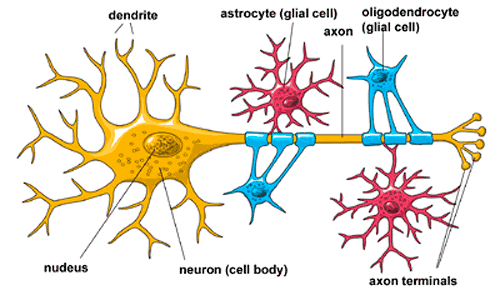
I’m setting up appointments with a peer who does craniosacral therapy and who also knows how to work specifically with the glial cells. Why glial cells? It’s becoming better understood that glia play a very important role in how the brain functions. In a class I took from Tad Wanveer, an Upledger therapist and teacher, I learned that through light biomechanical intention, dialogue, and touch, an experienced therapist can create real improvements in how the brain works. As Tad explains in his book Brain Stars: Glia Illuminating Craniosacral Therapy, glia are much more than “glue.” They play an integral part in:
- Central nervous system development
- Maintaining homeostasis
- Supplying nutrients and oxygen
- Synapse formation
- Healing injured neurons
- Sensory and motor signaling
- Cleansing the central nervous system
- Producing cerebrospinal fluid
- Immune response in the brain
- Insulation and flow regulation
- Memory processing
- Destroying and removing waste
If the glia become overstressed, or the environment they live in turns toxic, the whole central nervous system suffers. The good news is that the glia can be touched and supported in ways that help repair and speed the healing process.
As Tad writes: “Glial cells and neurons form an interdependent structural and functional system throughout the CNS that is fused with the Craniosacral System. This fusion takes place where glial cells attach to the pia mater membrane, the innermost membrane layer of the craniosacral system. It interconnects with the other membrane layers (meninges), and these layers connect to the bones of the cranium and spinal column. This bone-to-membrane-to-glial matrix is a dynamic biomechanical pathway CST practitioners can use to help their clients correct nervous system dysfunction.”
In that class I learned to touch into many parts of the brain and spinal cord. By listening and identifying through the different layers, you come to appreciate the body’s innate ability to self-correct from a deep well of wisdom within. It’s very possible to feel into structural and physiological restrictions, find a balance point for correction, and create better flow and drainage. In a more optimal environment, it’s much easier for the brain and spine to heal. I go deeper into this in Craniosacral Therapy for Brain Health.
It’s a bit ironic that my recent focus has been working more and more with people who have concussions and TBIs — and here I sit, healing from my own. But I feel very confident in the results I’ve had with others, in my ability to work with myself, and in the incredible experiences I’ve had receiving this work from other therapists. I know I’m getting better. I’m back to a light caseload (craniosacral work is not hard on the body or mind), and enjoying the small miracles of each session.
If you’re stressed about a concussion, please take seriously that rest and healing come first. But I’m here to tell you there are integrative therapies your doctors may not know about. Craniosacral therapy is a hands-on approach grounded in science and experience that has helped countless people. At the Upledger Foundation you can read about the work being done to help football players heal and feel better.
If you’re in the Columbus area with a concussion, give me a call — I’m happy to offer a free 15-minute phone consultation. And if you were hurt in a fall or a crash, my post on still hurting after an accident may help.
I can’t wait to get my hands back on the work!
Ready to feel better? I’m Sharon Hartnett, a Diplomate-Certified Craniosacral Therapist (CST-D) through the Upledger Institute, with about 30 years of experience listening to the body and helping it heal. My office is in Worthington, Ohio, and I serve the greater Columbus area.
If you’re curious whether this gentle work is right for you, I offer a free 15-minute phone consultation. Call or text me at (614) 653-8111.
Learn more about craniosacral therapy for post-concussion recovery, read answers to common questions about craniosacral therapy, or find out how to choose the best craniosacral therapist for you.
Hi Sharon! So sorry to hear about your concussion! I had one before and with plenty of harsh headaches. Im sure cranial sacral can help! Good to know you are making a difference in people’s lives through massage! 🙂
thank you so much. getting better every day!