(614) 653-8111 Sharhartnett@aol.com

How To Find Relief from Clenching

Clenching: You Deserve to Feel Better!

Is it possible to stop Clenching?

Bruxism is the name of the condition when you grind or are clenching your teeth.  Up to about 30 % of people do this.  Some people are aware that they clench.  And others not.

Clenching often happens when a person is stressed and awake. At other times, the clenching happens while sleeping at night. Eventually it is discovered, because it leads to pain or other issues like sleep disorders, pain in the face, issues with breathing, tinittus, and swallowing issues.

On a personal level,  I began to experience it after some concussions.  My jaw became misaligned.  Hitting ones head can also cause lots of stress when the cranium is knocked around.

I went to the dentist, and she gave me a mouth guard.  It was so uncomfortable I couldn’t wear it. Also, being a Craniosacral Therapist, I knew that it also inhibited the natural movement of the maxilla.  Didn’t work.  I will be honest and say that clenching has caused me a lot of issues.  On the positive note, I can also say that with persistence, one can help to alleviate and sometimes release all the tension contributing to bruxism.  It is possible to stop, but it may take patience to unwind all the causes which contribute to the condition.

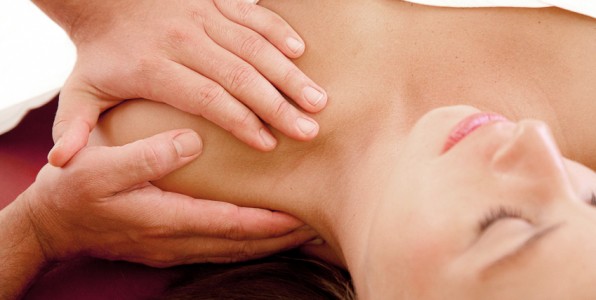
Being a Craniosacral Therapist,  I have worked in my own mouth, and that has helped me considerably.  Releasing all the tension around the hyoid muscles is key.  Also working around the TMJ joint.  Above are some pictures to show you the inter-relationship between the the neck and jaw muscles.  The Upledger Institute teaches a whole protocol on mouthwork which is very beneficial.  I enjoy working with people just to see the relief they find with mouth work.

Also facing your stress and anxiety with gentleness, while receiving some help can change your life and heal the body as well.  There are many somatic approaches to addressing the body that are profound and create postive change.  Some examples are Hakomi, SE Work, Upledger SER therapy and such.

Also myofunctional therapists can help with exercises.

Dendending on the stress and structure, it may take time to release and integrate the stressed from clenching.  But there is help available.

Sharon Hartnett CST-D

Worthington, Ohio|Serving the Columbus Area

614 653-8111

To find out more about Craniosacral Therapy, check out my main page.

www.upledger.com

See how a craniosacral therapist in Columbus can help you.


Explain How Is Craniosacral Therapy Different than Energy Work?

Explain How Is Craniosacral Therapy Different than Energy Work?

Craniosacral Therapy vs. Energy Work: What’s the Difference?

By Sharon Hartnett, CST-D, Upledger Diplomate-certified craniosacral therapist | Last updated: [date]

Is craniosacral therapy energy work? No. They are two different approaches, though they can complement each other. Craniosacral therapy (CST) focuses on the craniosacral system: the membranes and cerebrospinal fluid surrounding the brain and spinal cord. Energy work focuses on the body’s energy field and levels of consciousness.

People ask me this almost every time they call, so here is the answer in plain language. I’ve studied and practiced both for many years: more than 30 years in healing work [confirm], including the last 15 focused on CST through the Upledger Institute and 8 years at the Barbara Brennan School of Healing, where I also taught.

CST vs. Energy Work at a Glance

Craniosacral Therapy Energy Work
Main focus The craniosacral system (brain, spinal cord, cerebrospinal fluid, membranes) and fascia The body’s energy field and levels of consciousness
Grounded in Anatomy and physiology of the central nervous system and connective tissue The idea that energy runs through all living things
Touch Very light, hands-on Hands-on or hands-off, often within the energy field
Training Upledger Institute, founded on the work of Dr. John Upledger Barbara Brennan School of Healing, Reiki, and others
Intention Support the central nervous system and fascia Work with energy and consciousness, for healing and personal awakening

CST in Brief

CST is a gentle, hands-on therapy that works with the central nervous system and the fascia, the web of connective tissue throughout the body. Cerebrospinal fluid (sometimes called craniosacral fluid) is made in the brain’s ventricles, circulates around the brain and spine, and is reabsorbed into the venous system. For a full explanation, see my Craniosacral Therapy page.

Energy Work in Brief

Energy work is based on working with the vibrations of different levels of consciousness. The idea is that energy runs through everything and that each kind of energy shows up in its own way.

We know this from everyday life. When we kiss our children, we move energy through our own systems and then touch another person, and sometimes it creates a response in them. An athlete running down a football field is using the body’s energy. Lasers use energy and are part of medicine in many ways. Energy work uses this idea intentionally, for healing and for awakening. To learn how I work with it, see my energy healing sessions.

Is Craniosacral Therapy Energy Work?

The short answer is no, but there are similarities.

The difference is the focus. In CST, the intention is on the craniosacral system, the nervous system, and fascia. In energy work, it is on the energy field and consciousness.

The similarity is connection. Everything is made of energy, and when two people connect, something passes between them. In my experience, prayer, meditation, and focused intention affect others as well. So energy is moving between therapist and client during a CST session, just as it does whenever two people connect.

If a craniosacral therapist is also trained in energy work, it can be woven into a session. But the intentions differ, and I think it’s important to be clear about which one you’re receiving.

How to Choose Between Them

  • If you want a gentle, physically focused approach, CST is the place to start.
  • If you’re drawn to emotional, spiritual, or consciousness-based work, energy work may appeal to you.
  • If you’re curious about both, they can go hand in hand, even though the focus is different.

Still unsure? I offer a free 15-minute phone consultation to talk through what you’re looking for. See my craniosacral therapist in Columbus page for details.

Frequently Asked Questions

Is craniosacral therapy the same as Reiki or energy healing?
No. CST focuses on the craniosacral system and fascia. Reiki and other energy modalities focus on the body’s energy field.

Can craniosacral therapy and energy work be combined?
Yes. If a practitioner is trained in both, energy work can be incorporated into a CST session, though the intentions of the two approaches are different.

Does CST replace medical care?
No. CST is a complementary therapy and is not a substitute for medical care.

Energy work uses this idea intentionally, for healing and for awakening. If you’d like to learn more, see my approach to energy healing.


Craniosacral Columbus

Craniosacral Columbus

Craniosacral Columbus

During the last 20 years, I have thrown myself into Craniosacral Columbus work.  Why? Because I have seen so many positive results for my clients without having to dig in. I don’t have to create pain for the gentle release of pain to happen.  It’s much easier for my clients.

For many years, I focused on deep connective tissue work. I thought that by leaning my body weight in that I could get great results. Often I did. But that type of work can be quite uncomfortable. So, I decided to go for the more light touch work that worked with the body rather than pushing through,  to see if I could get as impressive results for pain relief and integration.  I do!

When a Craniosacral Therapist listens, your body tells us where there are restrictions throught the rhytym of the functioning of the cerebral spinal fluid, and also the fascia.  This “inner guidance” directs us where to go and how to support the Central Nervous (Brain & Spine Connection) system to function at its best.

The more I practiced Craniosacral Columbus therapy, I began to see my clients go deeper inside, releasing tensions and often stuck emotions. Their bodies relaxed. Their stressed disappeared. Many times, I have had clients falls deep into sleep after not being able to sleep for weeks. The fascia began to melt so easily, excess energy released, and people woke up with no pain, feeling clearer and happier.

This was an easy decision.  If I could help clients… people in pain from car accidents, those dealing with concussions, and neck and back pain, those with high anxiety-  the  picture was clear. I found my way to serve.

If you would like to find out more about Craniosacral Columbus therapy work,  contact Sharon Hartnett CST-D for information.  She is an accomplished Certified Diplomate CST therapist who has reached the highest certification through the Upledger Institute.  She has close to 30  years of experience in bodywork, massage, Hakomi and other healing techniques.

Craniosacral Columbus

Located in Johnstown, right outside of New Albany on a beautiful horse farm.  On Fridays, bringing Craniosacral Therapy at its highest level to Worthington, Ohio!

If you haven’t found stress relief or for your body pains, please call for a free 15 minute consultation at (614) 653-8111!  Looking forward to meeting and serving.

Warmly,  Sharon Hartnett CST-D

(614) 653-8111

www.craniosacralatherapistcolumbus.com

#craniosacral therapy

Craniosacral Therapy Session

Craniosacral Therapy Session

What will you feel during a Craniosacral Therapy Session?

Well, that really depends on the person.   Because each person has a different sense of awareness of his or her body.  In most cases, where people do mindfulness practice, yoga, some athletes, or massage often,  they tend to have more of an idea of the subtle movements and structure of their bodies.  But many people, don’t think to listen to their bodies honestly.  This is probably  just a cultural thing.  In the US, it has not been a common practice to meditate and close our eyes with awareness to what is happening to us in a sensory proactive way.  That is just the way it has been until more recently.

Craniosacral Therapy Session

Craniosacral Therapy Session

In the last few decades, there  have been more Doctors of Osteopathic Medicine training, and teaching lay people and other healthcare practitioners gentle ways to approach and listen to the body’s own inner healing abilities.  Fortunately, one of them, a Dr. John Upledger  decided that he wanted to get the very helpful and healing modality of Craniosacral Therapy (CST)  out to as many people as possible.  As such,  there has been a big influence in promoting massage therapists to use what I consider to be a more mindful CST approach.  Because when A Craniosacral Therapist listens to the body,  we attune to the body’s intelligence response with a very light touch.  With that, we also use intention and techniques that are able to bypass the body’s own defense system.   Thus allowing us to have a conversation with the fundamental wisdom of the body.  This is very different than effleurage, deep tissue, or swedish.  And believe it or not the effects go deep and create long term healing.  That is all because the body knows what to do, it just needs gentle support and encouragement.

In your Craniosacral Therapy Session, you will be fully clothed.  And you will most likely feel held. Most clients gradually notice quiet changes going on throughout the body.  Fascial restrictions will let go, and the energy flows better, circulation improves, and the Central Nervous System balances out.  Often people who are high strung will start to relax.  Many of my clients fall sleep.  On the flip side, people who are lethargic or low energy, do the opposite- and pick up energy. Initially, most people feel more when they get the work done closer to the neck and the head, mainly because that is where their awareness is often.  But it is also possible to feel the craniosacral rhythm in the feet as well. Over continual sessions, many people gain more insights into how their whole body works.  That sense of body amnesia disappears. With awareness comes self-empowerment and the ability to make healthy choices.   In the whole picture, clients feel more vital, alive, and pain free.

Sessions usually last between 45 -60 minutes on the table.  But there are also 5 day intensives with organizations like Integrative Intentions.   That group travels around the world and uses multiple hands on therapy with clients.  I have been a primary therapist at these and have seen miraculous changes and shifts occur.  Having a few therapists working on a client with others in a large room all day is quite transformational.

Craniosacral Therapy Sessions are for pretty much everyone.  There are a few patients with contraindications who should talk to their physicians if they have medical issues.

If you have any questions, please call for a free 10 minute phone consultation.

FAQ Page

Sharon Hartnett CST-D

Worthington, Ohio|Serving the Columbus Area

614 653-8111

To find out more about Craniosacral Therapy, check out my main page.


What is a Stillpoint?

The Benefits of a Stillpoint

As taught by the Upledger Institute,  the Craniosacral System is a semi-closed hydraulic system that is held within the membrane of the Dura, which contains the brain and the spinal cord.   The functioning aspect of this system that contributes to human life is the circulation and reabsorption of the Cerebrospinal Fluid (CSF).

When a Craniosacral Therapist is working with clients, we are listening to the continuous rise and fall of this fluid rhythm by its subtly felt expansion and contraction throughout the whole body.   We pay attention to the ways the bones and membrane dance with the CSF through symmetry, quality, amplitude and rate.  The intention is to use our listening and help the body to self-balance through gentle melding by touch.

When Craniosacral Therapists use the term, “Stillpoint” what we are expressing is the gradual stopping of the system through a gentle manual technique.  In particular, one way that is often used is the CV4 by using cupped hands to bring the occiput and surrounding tissues into a therapeutic stop.  The Craniosacral Therapist induces the Stillpoint by creating a barrier at the end of either the flexion or extension movement.  As the fluid quiets down, pressure is built back up, and when the tissues are released, a gentle cleansing flow can move through the body, releasing restrictions and adhesions.  This is very healthy for the Central Nervous System. Stillpoint can be applied anywhere on the body for positive therapeutic results.

For clients who have experienced Stillpoint, many have stated that they felt much less stressed, and some have had the experience of feeling a re-organizing type of sensation in their bodies.   Headaches can disappear, aches and pain go away .  Stillpoint is a wonderful technique that can have profound life effects. The Upledger Institute sells Stillpoint Inducers that can be used everyday from about 30 seconds to 10 minutes to create more freedom and flexibility in the body.  Yet the experienced hands of a Craniosacral Therapist can take you to la la land.

If you would like to learn more about Craniosacral Therapy in the Columbus, Ohio area,  call Sharon Hartnett CST-D

Sharon Hartnett Craniosacral Therapist Columbus

614 653-8111

Serving the Columbus, Ohio Area

For information, go to my main page.