(614) 653-8111 Sharhartnett@aol.com
What is SomatoEmotional Release (SER)?

What is SomatoEmotional Release (SER)?

Many clients who come in for Craniosacral Therapy ask about SomatoEmotional Release (SER).

They have usually heard from their friends or associates how much better they feel after a few sessions.  Yet they are not quite certain what  SER is.  So in order to educate potential clients, I’d like to take the Upledger’s description to share,

“ SomatoeEmotional Release may be defined as a release from the body tissues of energy that has been stored in the tissues for some time subsequent to an incident resulting in the placement of this energy in those tissues. The energy, which is foreign to the tissues in which it resides, almost invariably has within it an emotional component.  When the SomatoEmotional Release technique is effectively carried out, the emotion is re-experienced by the patient/client and, most often, a rather vivid memory of the incident during which the energetic placement occurred comes into conscious awareness.”

The most important intention that comes to my mind as a Craniosacral Therapist who works with SER, is to create a sacred environment that focuses on working with unity of the mind, body and spirit.  By holding space for the whole person, whatever shows up during a session can move forward,  all taken care of by the client’s own “Inner Physician (IP)”.  That inner intelligence that lies within regulates the session and helps the client to release energy that is caught up.  The Therapist is connected to the IP and follows its guidance without judgment.  This helps to complete unfinished cycles so that the client can feel finished with whatever unconscious material shows up.

SomatoEmotional Release

SomatoEmotional Release

Clients who have experienced trauma, anxiety and other emotional extremes often feel much better balanced after an SER session.  Not only from a feeling perspective, but also physically as well.   When the client is able to move through fear along with letting go of dysfunctional tissue patterns, they are often able to move more freely into their future.

SomatoEmotional Release can be an excellent addition to psychotherapy.  While students are trained in this type of work at the Upledger Institute , the foundation of the training is on working with the Craniosacral system.  I like to think that this training helps manual therapist to be prepared for whatever shows up in the session without trying to control it or working towards fixing things.  This is a journey of discovery and self-awareness.

If you are interested in finding out more about SER, please call Sharon Hartnett CST, at 614 653-8111 for a free 15 minute phone consultation.

Sharon Hartnett Craniosacral Therapist Columbus

614 653-8111

Serving the Columbus, Ohio Area

For information, go to my main page. 
 

Working with Fascia

EDUCATING PEOPLE ABOUT THE BENEFITS OF FASCIA TYPE OF THERAPY

by, Sharon Hartnett LMT, SI, CST (614) 653-8111

I have been working with Fascia as a primary type of massage for about 17 years. One of the most difficult things about this incredible type of work is explaining the difference between fascia work and general massage to the public. This is not your typical “Spa” massage, but its therapeutic benefits are longer lasting and generally much more profound in my opinion. Yet most people have only heard or experienced typical muscle massage. I’d like to list a few characteristics of fascial work to help you gain a better understanding of how it can help you:

1. The main objective of fascia work is to help release any restrictions or adhesions in the fascial system. The fascia itself is like a 3 dimensional web that envelopes the body and all the internal contents within. When one thing is pulled out of alignment, it affects the rest of the body. By intending to help the fascia to be free and fluid, the whole body improves in functionality and movement.

2. The actual touch can feel very different. Usually with general massage such as Swedish, the therapist uses oils and gently glides over the skin and underlying tissues. With deeper work, lubrication is still used even with the pressure. With fascial therapy, the therapist connects into the connective tissue layers and stretches the “material” until it forms a healthier consistency. The therapist waits for this, listens to the body and moves to the next restricted area. Also, while fascial work can be very comfortable, some clients who have limited mobility and flexibility who want quicker results may ask for a more assertive session. Like deep tissue, this can stir up a painful response. It’s up to the therapist and client to always dialogue about what feels like it is helping or not. Teamwork creates the best results.

3. Due to the relationship of fascia to the musculoskeletal system, fascia type of work can help improve posture more easily. When the fascia is lengthened, it gives more space to muscles, bones, organs and throughout the body. Fascia type of work brings the body back into its natural alignment. Taking stress and strain off the body helps people to walk and move easier.

4. Myofascial therapy can really help to give more optimal health to scar areas. When an injury happens to the body and scar tissue is randomly put down, it lock up certain areas of the body, which in turn affects everything. By working with scar tissue, the therapist can help bring more order to the dysfunctional patterns in the body.

5. Athletes or even anyone who moves in certain habitual patterns can definitely benefit from fascia work. When we use our bodies over and over in a particular way, imbalances can occur between front/back, side/side, top/bottom- basically all over. Working with the whole body through myofascial therapy, therapists can help the body to normalize.
I love my work. Touching into the intelligence of the body through the fascial has turned around the health of so many of my clients. Recently, I had a “Senior” in who had a deep sore that looked black that wouldn’t heal. The next week, it was pink and purple. I couldn’t believe how much improvement he had. My thought was that because we opened up the tissues there, his body could self correct and heal better. It had been like that for a while and then this huge change. Most massage therapist practitioners get into this work because they like helping people. What could be more rewarding?
If you are interested in receiving fascia type of work, contact Sharon at (614) 653-8111 for a free 15 phone consultation.

Warmly,
Sharon Hartnett LMT
Structural Integration Therapist
Certified Advanced Craniosacral Therapist
Columbus, Ohio

www.massageincolumbusohio.com

www.craniosacraltherapistcolumbus.com


Basics about Your Nervous System

Basics about Your Nervous System

What is the Nervous System in Human Beings?

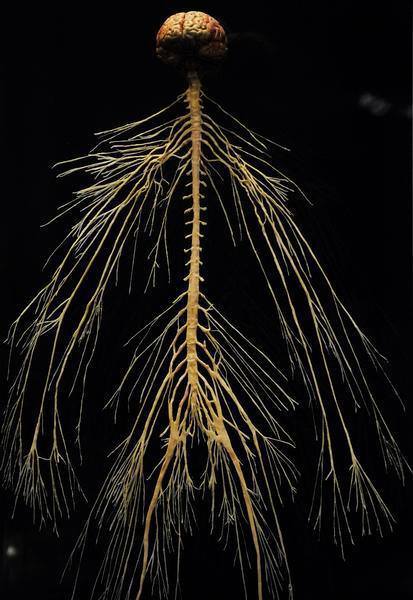
The nervous system is a complex and intricate network that is set up to help facilitate informational dialogue and exchange within you and throughout all the relationships around you.  The Nervous System consists of basically two parts:  The Central Nervous System and the Peripheral Nervous System.  You can think of these two different systems as a computer that relays information from one place to the other.  In the Case of the Central Nervous System,  we are focusing on the two structures: the brain and the spinal cord (long bundle of nerves).  The brain is the control center and the spine transmits information to and from the rest of the body.  The Peripheral side of things include the nerves or ganglia found outside of the Central Nervous System.

Nervous System

Craniosacral Therapy supports the health of the Nervous System


As you can see by the above picture, the CNS and PNS are extensive.  In Craniosacral Therapy, we use this knowledge to help clients to optimize their health benefits by keeping the cerebrospinal fluid (CSF) and soft tissue flow smooth and balanced.  By working with the Craniosacral System, we can subtly listen to how the tissues around the brain, along the spine and throughout the body are responding.   By working with symmetry, rate, amplitude and quality of the rhythm, we can help release restrictions and adhesions from around the nerves.  It’s important to allow for nervous system functioning to keep organs, muscles and intelligence of life operating in ease.

From my perspective, with Craniosacral Therapy, the primary focus is keeping the Nervous System healthy, and by doing this- we are also encouraging everything in the body to relate more efficiently and with proper functioning. When we feel good with our internal links, our external links and relationships feel better too.

Sharon Hartnett LMT, CST, SI

Advanced Certified Craniosacral Therapist

(614) 653-8111

Columbus, Ohio

(Most people have a basic understanding of the brain, but for a good resource to find out more about the Peripheral Nervous System, check out:

Peripheral Nervous System Disorders

Through the Mayo Clinic link)


What is a Stillpoint?

The Benefits of a Stillpoint

As taught by the Upledger Institute,  the Craniosacral System is a semi-closed hydraulic system that is held within the membrane of the Dura, which contains the brain and the spinal cord.   The functioning aspect of this system that contributes to human life is the circulation and reabsorption of the Cerebrospinal Fluid (CSF).

When a Craniosacral Therapist is working with clients, we are listening to the continuous rise and fall of this fluid rhythm by its subtly felt expansion and contraction throughout the whole body.   We pay attention to the ways the bones and membrane dance with the CSF through symmetry, quality, amplitude and rate.  The intention is to use our listening and help the body to self-balance through gentle melding by touch.

When Craniosacral Therapists use the term, “Stillpoint” what we are expressing is the gradual stopping of the system through a gentle manual technique.  In particular, one way that is often used is the CV4 by using cupped hands to bring the occiput and surrounding tissues into a therapeutic stop.  The Craniosacral Therapist induces the Stillpoint by creating a barrier at the end of either the flexion or extension movement.  As the fluid quiets down, pressure is built back up, and when the tissues are released, a gentle cleansing flow can move through the body, releasing restrictions and adhesions.  This is very healthy for the Central Nervous System. Stillpoint can be applied anywhere on the body for positive therapeutic results.

For clients who have experienced Stillpoint, many have stated that they felt much less stressed, and some have had the experience of feeling a re-organizing type of sensation in their bodies.   Headaches can disappear, aches and pain go away .  Stillpoint is a wonderful technique that can have profound life effects. The Upledger Institute sells Stillpoint Inducers that can be used everyday from about 30 seconds to 10 minutes to create more freedom and flexibility in the body.  Yet the experienced hands of a Craniosacral Therapist can take you to la la land.

If you would like to learn more about Craniosacral Therapy in the Columbus, Ohio area,  call Sharon Hartnett CST-D

Sharon Hartnett Craniosacral Therapist Columbus

614 653-8111

Serving the Columbus, Ohio Area

For information, go to my main page. 


Recharge with Craniosacral Therapy

Recharge with Craniosacral Therapy

In order to best help my clients to recharge, I ask them to get involved in their Craniosacral sessions by bringing self-awareness to their bodies with mindfulness.

Most people are so busy with their days, they forget to pay attention to their body signals that tell them something is off.  These accumulate until one day pain cries out “OUCH”.  Something hurts.

By bringing clients into the process each session and giving them stretches and exercises, people can be empowered to shift body patterns and habits to reduce pain.  Craniosacral Therapy, Structural Integration and different types of massage can be wonderful when experienced occasionally, but giving yourself the gift of learning to listen to your mind, body and spirit connection can bring long lasting change verses an hour of feeling good.

Working with the body in an intuitive gentle manner,  Craniosacral Therapy helps clients to balance and find deeper grounding.  Often I find clients falling asleep because of the need for rest, only to wake up feeling refreshed and more keenly aware of their center and relationships.  For clients who stay awake,  often feelings and sensations are  processed in a way that leaves them feeling more free and clear in their thinking and feeling.  I like to think of Craniosacral Therapy with my clients as a supportive method of facilitating self-correction with the wisdom of the body.  Systems that are overly reved up quiet down.  Clients who feel stuck mostly let go of their burdens and restrictions.

Craniosacral Therapy

Craniosacral Therapist Sharon Hartnett

If you are looking to recharge and feel more alive in your life, Craniosacral Therapy may be the tool to help open you up!  The first thing you can do is make a commitment to waking up to your health and wellness.

Loving Craniosacral Therapy.  Clients love the positive results they experience with this work.

FAQ Page

Sharon Hartnett CST-D

Worthington, Ohio|Serving the Columbus Area

614 653-8111

To find out more about Craniosacral Therapy, check out my main page.


Healing a Workplace Injury

Healing a Workplace Injury

Nonfatal injuries that occur in the workplace keep many employees away from the job.

Traditional medical approaches such as medication, surgery and physical therapy may not totally support the recovery of a workplace injury.  Most Massage Therapists that I have spoken with agree that there can be residual effects for their clients that make it difficult to go back to work if not addressed holistically.  Healing touch and presence is where massage can enhance the return process to health.

Work injury

Massage help for Work Injuries

Massage Therapy is much more than a simple rub.  For starters, clients often like to talk during sessions when they feel stressed.  Everything in a session is confidential and the client is able to get things off their chest.  Anxiety for one is a common side-effect of workplace injury and by feeling safe to feel deeply in the body with care and trust can really help.  After work related incidences, clients can feel off kilter.  Being gone from work or believing that your job may not be there when you are ready to go back can be frightening.  Just having a person to listen in an intimate zone is healthy.  While massage therapists do not replace psychotherapy, many learn basic techniques to hold space and to allow for the avenue of expression to open while applying massage techniques.  The wisdom of the mind, body and spirit is able to align more easily with this type of approach. Craniosacral Therapy, in particular through the Upledger, is supportive to this process for those who are experienced with SomatoEmotional Release Therapy.   Most types of trauma can be helped with mindful massage and bodywork.

Physically,  massage relieves tension and creates healthier dialogue within the body.  Massage Therapy helps decrease pain transmitters.  When clients are in less physical pain,  it’s easier to find your way out of depression and lack of sleep.  Most adults need between 7-9 hours of rest to function optimally.  Without it,  employees may feel fatigued, unable to cope with stress, have difficulties making decisions and feel less creative.  Quality sleep will help you to get back to work and perform more easily.  Feeling better mobility and range of motion from therapeutic touch will brighten your day too!

As a Massage Therapist for about 17 years,  I have spoken to many people who have received massage and other types of bodywork.  For them, almost every person said they would like to receive more massage therapy, but it isn’t covered by insurance in a lot of instances. This most likely means that people who have gotten hurt,  run into the same challenge.  The cost is prohibitive to them in their thinking.   But I’d like to remind people that massage is not just a luxury.  Massage Therapy is one of the greatest ways to relax and unwind.  Letting go of your stress patterns is essential to good health.  When you find a good parter for you to help you to relax with therapeutic means, life just feels better.  So whether you have been injured at work or are experiencing stresses from everyday life,  imagine a world where you chose to feel better.

Sharon Hartnett LMT

Serving the Columbus, Ohio area.

(614) 653-8111

www.massageincolumbusohio.com

For more info on massage:

https://www.mayoclinic.org/healthy-lifestyle/stress-management/in-depth/massage/art-20045743