(614) 653-8111 Sharhartnett@aol.com
Somatic Massage in Columbus, Ohio: What It Is and How It Differs from a Regular Massage

Somatic Massage in Columbus, Ohio: What It Is and How It Differs from a Regular Massage

What Is Somatic Massage?

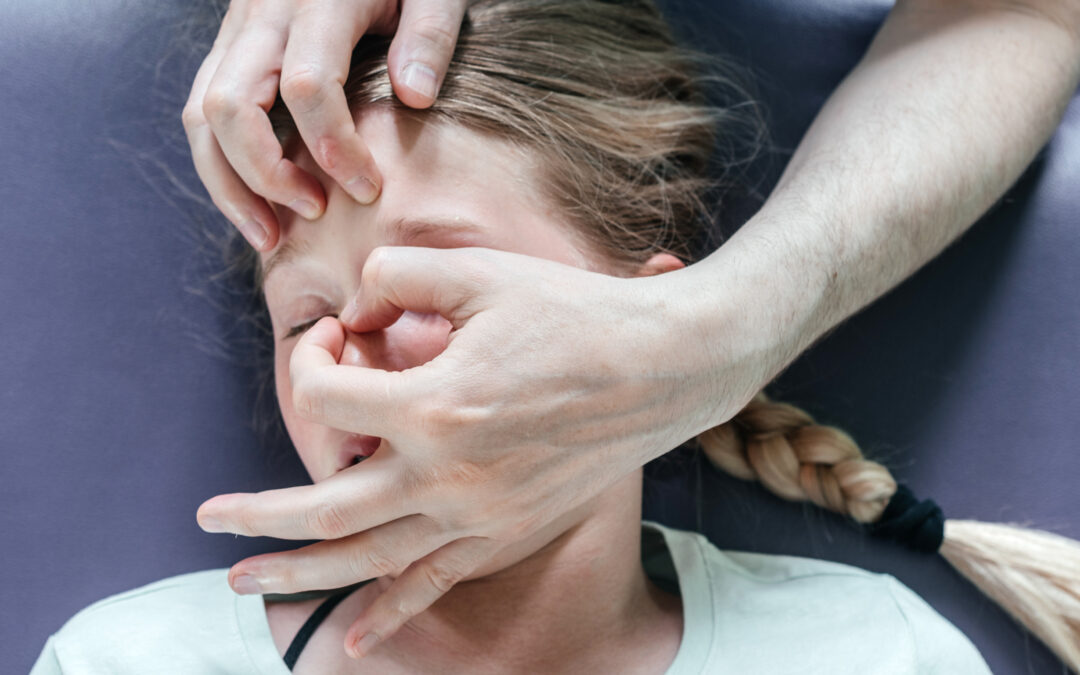
Somatic massage is a form of body-centered therapy that focuses on the living experience of being in your body. The word "somatic" comes from the Greek soma, meaning "body." Rather than working only on muscles, a somatic massage therapist works with the whole person — tissue, nervous system, breath, sensation, and the emotions that live in the body.

In my Worthington practice, serving the greater Columbus, Ohio area, somatic massage is woven into nearly every session. The base of my work is gentle craniosacral therapy with a somato-emotional presence. When something deep or painful arises while my hands are melded with a client's body, I draw on my other somatic training to help that person find their own inner resources for completion.

Somatic Massage vs. a Regular Massage

A regular massage works from the outside in. The therapist kneads, strokes, and presses the muscles to relieve tightness, and you relax while it is done to you. It feels good, and it has real value.

Somatic massage works from the inside out. The touch is usually lighter and slower, and you are an active participant. I may ask what you notice — a breath held, a shoulder lifting, warmth, tingling, a memory, or nothing at all. Instead of forcing a tight area to let go, we listen to it until the nervous system feels safe enough to release on its own. The change arises from within rather than being imposed from the outside.

Here is a simple way to see the difference:

  • Goal: a regular massage aims to loosen muscles; somatic massage aims to restore the connection between you and your body.
  • Pressure: deep tissue uses firm pressure; somatic work is usually gentle, often no more than the weight of a nickel.
  • Your role: in a regular massage you receive; in somatic massage you sense, notice, and respond.
  • What shifts: muscle tension in a regular massage; in somatic work, held stress, tension, and sometimes old trauma held in the tissues.

Many people assume that light touch is less effective than deep tissue. In my experience it is often the reverse: dialoguing gently with the nervous system creates change that lasts, because the body did the letting go itself.

The Schools Behind Somatic Bodywork

There are several schools that teach somatic approaches. Some of the best known are The Hakomi Institute, The Upledger Institute, The Sensorimotor Psychotherapy Institute, and Peter Levine's Somatic Experiencing trauma healing school.

I have studied Hakomi, SomatoEmotional Release (SER) through Upledger, and trauma work at the Sensorimotor Psychotherapy Institute, learning somatic techniques alongside both psychotherapists and bodyworkers. Hakomi uses mindfulness as its key to developmental wounds and "healing attachment." My SPI training was directed more toward supporting whatever trauma shows up on the table during a session. While I have not trained in Somatic Experiencing, my understanding is that it shares SPI's focus on trauma.

The boundaries between bodywork and psychotherapy are a bit tricky from both ends, because each state licenses touch and therapy differently. Generally, manual bodyworkers like me use somato-emotional work to support any emotional or spiritual arising that occurs while working with the body in a session. Psychotherapists focus on the mind-body relationship more from a distance, usually without touch. Every practitioner must stay within the scope of their license, and I do.

What Is Somatic Release?

Basically, what we are working with is an emotional response to distressing events that never processed all the way through. Some call this cellular memory. The body holds the unfinished response as tension, guarding, shallow breath, or a numb area that you have stopped noticing.

A somatic release is the moment the body completes that response. It can look like a deep sigh, a wave of warmth, trembling, tears, a spontaneous stretch, or simply a tight area going soft under my hands. It is not something I make happen. My role is to stay neutral and present so that your system feels safe enough to let it happen.

In the Upledger tradition this is called SomatoEmotional Release, and I have written about it in more depth on that page. Working from the bottom up — body first — can integrate things that are not as available through talk therapy alone.

Somatic vs. Visceral Work

People sometimes ask me the difference between somatic and visceral therapy. Somatic work addresses the whole felt body — muscles, fascia, nervous system, breath, and emotion. Visceral manipulation is more specific: it gently restores the natural motion of the internal organs and the connective tissue around them, which can affect digestion, breathing, and pelvic comfort. In my sessions the two often work together — a restricted organ can hold an emotional pattern, and a somatic release can free the tissue around it.

Who Somatic Massage Helps

Clients in Columbus and Worthington come to me for somatic massage when they have:

  • Chronic neck, back, or jaw tension that keeps returning after regular massage
  • Stress and anxiety that they feel in the body — a tight chest, a clenched stomach, a held breath
  • Old injuries or surgeries that still "feel stuck"
  • Emotional trauma they would rather approach through the body than through words alone
  • A sense of being disconnected from, or numb in, their own body
  • A desire to feel calmer, more grounded, and more at home in themselves

Sessions are done fully clothed on a massage table. They are gentle, paced by you, and always guided by safety and choice. Somatic therapy is helpful because it integrates the mind and body beautifully.

Choosing a Somatic Massage Therapist

If you are looking for a therapist to help you heal deeply, remember that most programs and schools teach us to create a safe and trusting environment first and foremost. Still, it is important to interview your therapist and ask about their training and experience. All therapists have unique approaches — find the person who fits your needs best. I have written a guide on how to choose a craniosacral therapist; the same questions apply to somatic work.

Related Reading

Frequently Asked Questions

Is somatic massage the same as somatic therapy?

They overlap. "Somatic therapy" is often used for a psychotherapist's talk-based approach that includes body awareness. "Somatic massage" or somatic bodywork is hands-on, done by a licensed bodyworker, with the body as the starting point. I practice the hands-on form.

What does a somatic release feel like?

Often a deep breath, warmth, a gentle shaking, tears, or a tight area simply softening. Some sessions have no dramatic moment at all and you just leave feeling lighter and clearer. Both are good outcomes.

Do I have to talk about my past?

No. You are welcome to share as much or as little as you like. The work happens through sensation and touch, and I follow your pace.

Is it painful?

No. The touch is gentle — usually much lighter than a regular massage. If anything ever feels like too much, we pause.

How many sessions will I need?

Every body is different. I usually suggest three sessions to feel how your system responds, and then we decide together.

Somatic Massage in Worthington and Columbus

If you have questions about whether somatic massage is right for you, contact me — I offer a free 15-minute phone consultation.

Sharon Hartnett CST-D
Worthington, Ohio | Serving the Columbus Area
(614) 653-8111

To learn more about the gentle work at the foundation of every session, visit my craniosacral therapy page.

How to Continue Feeling Your Best with Fibromyalgia Symptoms.

Were you diagnosed with Fibromyalgia?

Fibromyalgia pain is not a simple diagnosis. It can reveal itself in different ways based on the uniqueness of each individual person. What we do know is that fibromyalgia does feel like heightened pain. It can show up anywhere on the body. However, normally a physician can diagnose by pressing on certain tender points. There are nine familiar locations found from the top of the body on down.

Flares can be brought upon by stress, hormonal changes and lack of sleep. Some people say weather changes can attribute to more pain as well. Whatever the cause, people with fibromyalgia suffer from body aches and fatigue.

Once you are diagnosed with Fibromyalgia, what is next?

What is now understood is that the central nervous system (CNS) has been overstimulated. Of course anything that calms the CNS is helpful. Check with your physician for any recommendations they suggest. Of course, there are also integrative practices that can be helpful too.

1. Yoga

2. Tai Chi and Qigong

3. Very Gentle Stretching

4. Walking

5. Meditation

Also, I’d be remiss if I did not bring up Craniosacral Therapy as a promising modality to help with fibromyalgia. The Upledger Institute has taught many therapists who work across the world to work with clients through soft and gentle listening and melding with the Craniosacral System. Often my clients enjoy this manual therapy over massage because they don’t feel pain with the touch, nor do they feel sore afterwards. Their brains feel calmer and their bodies relax.

If you’d like to find out more about how Craniosacral Therapy can help you, check out the Upledger website. Find a Craniosacral Therapist, call and interview each practitioner until it feels like the best fit for you. Let me know on my blog how it goes, because I like to hear how CST can help!

Sharon Hartnett CST-D

(614) 653-8111

To learn about my Craniosacral Therapy services, visit my main page.

Grounding: 7 Fun Ways to Start Your Day Afresh

What is Grounding?

In all the years I have been doing healing work, whether energetic or geared toward embodiment, I have heard a lot of talk about grounding. But what the heck does that word, “grounding,” mean?

In current times, grounding means reconnecting to the earth’s electric energy. I have often read and observed that when done properly, grounding can help calm anxiety and stress. As a Craniosacral Therapist, while I am sitting at the feet of a person who comes into awareness of their body, it’s easy to sense their “grounded presence” down to the toes. It feels very integrated, and full.

Here are a few ideas you can try to have your own experience of grounding:

1. Breathe into your body with awareness. Mindfulness wakes up the body communication between the brain and the rest of yourself. Start by breathing in your head, and work downward until you embrace the sensation down to your toes.

2. Walk barefoot outside. I know that when I walk outside, I feel my feet being supported by the earth. I listen to what the earth sounds like to me, and it feels so structured, nourishing and strong. It’s great!

3. With loose wrists, do percussion slapping lightly around your whole body. It’s sort of like cupping very quickly to a rhythm. It stirs the nervous system into attention.

4. Jump into some water. Either a shower, bath or a pool. Soak and feel the sensations. Water can help us to feel refreshed and awake.

5. Play with your dog or cat. Animals are naturally grounded. Interacting with them can bring such joy and groundedness.

6. Jump rope or jump on a small trampoline, or sit on a bounce ball. All of these help to connect the feet and legs to the earth. Of course, waking up the lower part of our bodies as well.

7. Dancing: Anything that is done through movement with the body can be very grounding. It’s fun, creative and opens us up to the more physical parts of ourselves.

I can’t tell you how many times people lose their connection to the ground, especially as they get older. It’s important to connect to the physical part of our being. It helps us to feel like the earth is here to provide us with what we need. It helps us to trust in life. Feeling ungrounded is also one of the signs I describe in my post on blocked chakras and how to clear them.

So when you are feeling afraid, or stressed, set your intention to reconnect again by grounding. Make it a daily practice. Notice how much more secure and happy you feel. Pull yourself up from your bootstraps and take off!

Sharon Hartnett CST-D

Worthington, Ohio | Serving the Columbus Area

614 653-8111

To find out more about Craniosacral Therapy, check out my main page.

Breathe: Easy Fix to Feel Better.

Breathe Through It. An Easy Way to Begin Self-Care

Some people have to work three jobs to make things work. They hardly have the time to breathe or think about “Self-Care”. Others are focused on Success and they keep pushing themselves past many personal boundaries until they are stressed and exhausted. Then there are those who just never learned that relaxation and rest is “Needed” and “Essential” to staying healthy.

We live in a society that is all about the “push”. Of course there is a place for this. However, there is also the other side to this equation. There needs to be a place where and when it’s just fine to do nothing but breathe and take a break. A long and luxurious moment of “nothing”. We also need to find a way to build healthy relationships with friends and family. Life is meant to be enjoyed.

Our bodies can revve up too much though and our nervous system takes a hit. Eventually excess stress can lead to sleeping trouble, lack of focus, sickness and headaches, and chronic pain. The list goes on.

If you are reading this, perhaps you are one of those people who feel like your nervous system has forgotten how to calm down. Perhaps you feel like you have no options but to work work work. There’s too many things that must be done.

I’d like to suggest that taking moments, precious moments with mindful care can be a good beginning. If you are running around on high drive, take a moment every hour to go inward and breathe through your nose. Begin to connect with yourself over prioritizing everything that must be done. Mindfulness in the moment can nourish and remind you of your true life work. It helps to awaken the resources and interconnection inside and out. It may remind you that there is another reality possible where you can move through life more easily and with support.

Once you have established a positive habit of breathing with awareness and centering, start to extend that time longer and longer. Thereafter, begin to notice how things in your life begin to change. Taking care of yourself is an inside job, and all this takes is intention. When we take the time, as a priority, to get centered, things change. Believe it or not, each and every one of us holds wisdom and life purpose. Begin by giving yourself the gift of time and self-realization. Empowerment begins by knowing yourself.

Breathe and Boost Your Mood and Deepen into Relaxation.

Sharon Hartnett CST-D

Worthington, Ohio | Serving the Columbus Area

(614) 653-8111

To find out more about Craniosacral Therapy, check out my main page.

Give Yourself the Best: Why Not?

,What is the Best Life You Can Live?

First, in your best life,  you would have to know what you want, and what you deserve. I am not necessarily speaking about material things, although those can be part of the equation. But those things are the afterthought.

What truly matters for you when you get down to the nuts and bolts? Imagine in the future, after a life well lived. What would be the most important thing on your mind and in your heart when you look backwards? What made that heart of yours transform into something better, more vital and full of love?  What experience made your heart feel like singing?

In this physical life, it is true that we need the basics to exist. We need food, water, a shelter and such. But the next stage after existence leads us more into passion and into healthy relationships.  We all deserve more than just existing. Although to exist is a priviledge indeed.

As people, we have the potention to sense and to feel so many things. The significance is in the experience which brings us more meaning. Much more than any objects beyond what it takes for us to live in sustainability. It’s in our growth through reaching out, learning and taking the essence of life back into our deepest core where we stir the deepest internally.

This is a short post, an invitation, to remember to question values and what contributes to living the best life one can. While life circumstances help shape us, it’s up to us, through intention and our choices and actions, where we will end up, and how we decided to live. What can be better than to Live Our Best Life. Knowing that we always have a choice.

Your best life is right now. Take that mountain of past experiences, and chose wisely your next step. At the end, that is what will count. That is what we will remember in the end when we leave with nothing else.

Joy to you!  Some poems about life.

Sharon Hartnett CST-D
(614) 653-8111
www.craniosacralatherapistcolumbus.com

6797 N. High St. #333

Worthington, Ohio 43085


The Body Knows How to Heal: Loving What IS..

To Heal is an Inside Job

To Heal Comes From Within You.  People often forget that there is a deep intelligence inside the body that is alway in motion when it’s healthy.  It’s our Life Force, our Qi.

If you think about it, each organ has an inherent motion, and all the other organs slip and slide along side each other with the help of the many fluids.  Down to the inside and outside of the cells, there is the nourishing  of the various components which are always at work,  joining together, like small streams, to sustain the greater whole.  There is constant communication and transmission of vital information.

So how does one access this deep intelligence?  When something goes awry in the body, it only makes sense, that an outside type of influence is necessary to nudge the system back into a cycle of health.

That’s where mindful bodywork with techniques can help. Depending on the focus, a manual therapist can listen to the body, and support the Inner Wisdom based on the response.

This can be done with Craniosacral Therapy, by a Visceral Manipulation Therapist, through Acupuncture, manipulaton by a Chiropractor, etc… Most of these therapies are complimentary and work hand in hand to heal.

For people who are searching for the best tools to help activate their healing, it’s important quite often to try different therapies, and sometimes even different therapists within a modality.  That’s because each therapy and each therapist’s unique contribution can influence you in a different way.

What’s unique about the Upledger Institute’s Work is that the focus is placed on addressing the Inner Physician.  It takes a deep trust of the Inner Wisdom, for the ego to move out of the way, and allow the melding and healing to run the process.

If you are looking seriously to shift and change your life, discover yourself through healthy relationship.  Interview and question potential therapists.  Trust your own instincts, and the truth for you in the moment will tell you your next move.  Realize, that Therapists can help by encouraging the healing cycle.  But it’s only your Inner Resources that can make it happen.

Sharon Hartnett CST-D

Worthington, Ohio|Serving the Columbus Area

614 653-8111

To find out more about Craniosacral Therapy, check out my main page.