(614) 653-8111 Sharhartnett@aol.com

ADHD Help

The percentage of drugs that children take for ADHD has gone up dramatically.

I have no judgement about this.  Physicians are doing what they can to help children who feel inattentive, high energy and are having a difficult time integrating into mainstream daily life. Medications can help.  Maybe there are some more integrative treatments as well.

ADHD can be challenging. On top of the child’s own inherent challenges, they often can face rejection by other children, teachers and their community as well.

So what else can be done to help our children?

How about trying a more natural approach that will support the best qualities of your child to shine ?

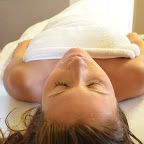
Craniosacral Therapy has been able to help lots of kids with ADHD to calm down and feel more centered.  Personally,  there is nothing better than having a child get up off the table and give me a big hug because they finally have a sense of peace and balance.  If we can encourage the child to lay down and receive the work, the Central Nervous System often will feel some huge shifts.  By working with the brain, spine, and surrounding tissues, we can assist the cerebrospinal fluid to function optionally, allowing the CNS to do its work more efficiently.

When one’s mind is busy, one of the best experiences can be to relax and feel quiet.

Here are some benefits CST can provide:

Craniosacral therapy (CST) is a gentle, hands-on technique that focuses on the craniosacral system—comprising the membranes and fluid surrounding the brain and spinal cord. It’s used to release tension and improve the functioning of the central nervous system. CST is often considered a complementary therapy and is sometimes suggested for children with Attention Deficit Hyperactivity Disorder (ADHD) to help manage symptoms. While the evidence supporting its effectiveness for ADHD is limited and more research is needed, proponents believe that CST may help in the following ways:

1. Reducing Stress and Tension

Children with ADHD often experience heightened stress levels and may have difficulty relaxing. CST is thought to promote relaxation by gently releasing physical tension in the body, which could help improve emotional regulation and reduce hyperactivity.

2. Improving Focus and Attention

Some children with ADHD struggle with concentration and maintaining focus. CST may help improve the flow of cerebrospinal fluid around the brain and spinal cord, which in theory could support cognitive function, leading to better focus, clarity, and overall mental performance.

3. Enhancing Emotional Regulation

Children with ADHD often have difficulties with emotional control, including impulsivity and difficulty managing frustration. CST may help by promoting a sense of calm and balance, possibly improving emotional regulation over time.

4. Promoting Better Sleep

Sleep disturbances are common in children with ADHD, and poor sleep can exacerbate ADHD symptoms. By supporting relaxation and reducing physical tension, CST may improve sleep quality, which in turn could help with mood, attention, and behavior during the day.

5. Supporting Sensory Integration

Children with ADHD sometimes have sensory processing issues, such as being oversensitive to certain stimuli or having difficulty filtering out irrelevant sensory input. CST is thought to help normalize sensory processing, which may improve how a child responds to stimuli and help with focus and behavioral regulation.

6. Increasing Overall Calm and Self-Regulation

CST’s gentle techniques might help a child feel more grounded, leading to improved self-regulation, which is often a challenge for children with ADHD. By working with the body’s natural rhythms and promoting balance, CST can support overall well-being.

7. Addressing Underlying Physical Tension

Many children with ADHD have been shown to have heightened muscle tension, particularly in the neck, shoulders, and jaw. CST could help alleviate this physical tension, which may contribute to reduced anxiety and better mental and emotional functioning.


If you would like to try a Craniosacral Session, look at the Upledger site for a practitioner in your area.  I’d recommend looking for someone who is certified to make sure they have a thorough understanding of the work.

If you have questions about how Craniosacral can help alleviate some of  your child’s ADHD symptoms, I would love to chat.


For more information on ADHD:

Sharon Hartnett Craniosacral Therapist Columbus

614 653-8111

Serving the Columbus, Ohio Area

For information, go to my main page. 
 

Post Concussion Syndrome Help with Craniosacral Therapy Columbus

Post Concussion Syndrome Help with Craniosacral Therapy Columbus


Concussion

Craniosacral Therapy


Post-Concussion Symptoms: When Recovery Takes Longer Than Expected

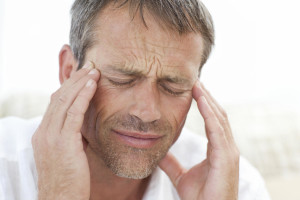
If symptoms linger for more than three months after a head injury, your physician may diagnose Post-Concussion Syndrome. Common symptoms include:

  • Dizziness
  • Insomnia
  • Fatigue
  • Irritability
  • Headaches, nausea, or memory and concentration problems
  • Just not feeling like yourself

If you’ve hit your head, get checked by a physician, even if the injury seems minor. Symptoms can last a long time when they go unaddressed. Seek emergency care right away for a worsening headache, repeated vomiting, confusion, seizures, weakness or numbness, unusual drowsiness, or loss of consciousness.

How Craniosacral Therapy Fits In

Once you have a diagnosis and your doctor’s guidance, you may want to add supportive care. In my craniosacral therapy practice, I’ve worked with clients dealing with headaches, memory issues, nausea, difficulty concentrating, disorientation, and other day-to-day challenges. Many report feeling better within a few sessions, though every person and injury is different.

What a Session Looks Like

  1. Interview and whole-body evaluation. I begin by learning about your injury and symptoms.
  2. Rest first. I ask clients to wait at least 10 days after the injury before hands-on work, because early rest is essential to healing.
  3. Listening hands. On the table, I use very light touch at different areas of the body to sense where tension is held and how the work should proceed.
  4. A whole-body approach. Many people expect the whole session to focus on the head, but that hasn’t been my experience. After a fall or blow, tension can be pulled through the entire craniosacral system. If someone was knocked off their feet, for example, I may start by balancing the feet, pelvis, and especially the sacrum to prepare the body for work around the cranium. When the body below the head is working better, the work around the brain tends to go more smoothly.

Why Gentle Touch?

Craniosacral therapy uses very light pressure to release fascial restrictions and support the craniosacral system and central nervous system, with little or no discomfort. Most clients leave deeply relaxed and feeling more integrated. Craniosacral therapy complements, and does not replace, medical care.

Concussion Awareness Matters

Concussions have received growing attention, especially in youth sports. If you or someone you know has taken a blow to the head, see a physician promptly, since early care matters. An integrative approach that includes craniosacral therapy may help you feel clearer, more energized, and more like yourself.

Ready to explore gentle support for concussion recovery? Book a craniosacral therapy session in Columbus, Ohio.

Sharon Hartnett, CST, SI, LMT
📞 614-653-8111
🌐 www.craniosacraltherapistcolumbus.com

7 Reasons Why You Should Get Craniosacral Therapy

7 Reasons Why You Should Get Craniosacral Therapy

How Can Craniosacral Therapy Help You…

Simple and  Easy:  this is an easy way to release stress.  When the mind and body can calm down and balance, the internal healing potential can do wonders.


Craniosacral Therapy

Craniosacral Therapy


Just to name a few benefits:
  • Relieves Neck and Back Pain
  • Improves Range of Motion
  • Reduces Anxiety and May Help with Depression
  • Helps Resolve post-surgery adhesions
  • Boosts the immune system
  • Alleviates Fibromyalgia discomfort
  • Balances the spinal alignment with Scoliosis

Bonus:  It can help with post-concussion symptoms!

Experiences vary from session to session.  This light touch can bring about profound changes as it works directly  with the Central Nervous System to balance.  Clients may fall asleep, become very talkative, feel deep emotions that come to surface as the stress leaves the body.

CST can unleash your healing potential.

If you want to find a therapy that is gentle and effective to help you let go of tension, check out the Upledger Institute for a local practitioner near you.

FAQ Page

Sharon Hartnett CST-D

Worthington, Ohio|Serving the Columbus Area

614 653-8111

To find out more about Craniosacral Therapy, check out my main page.


Can Craniosacral Help with the Winter Blues?

Can Craniosacral Help with the Winter Blues?

Whether you are experiencing the winter blues or a more extreme case of SAD,  Craniosacral Therapy can help you you to reconnect to joy and wellbeing.


What do you know about Craniosacral Therapy?

Winter Blues

Alleviate Winter Blues


Craniosacral Therapy may help. One in five Americans fall into “seasonal mood disorder”. The shorter days and colder weather brings us inward.  It’s a time when we get to be more quiet and reflective. For some people, this isn’t so easy. Women, in particular, can be negatively impacted by the lack of sunlight.  By finding out more,  you may realize that there is some help. Learn more about your symptoms.

Symptoms that may show up:

  1. Low Energy
  2. Problems Getting Along
  3. Agitation
  4. Staying in Bed
  5. Depression
  6. Overeating
  7. Feeling Anxious
  8. Trouble Concentrating
  9. Losing Interest

If you are one of those people that feels more stressed and disconnected during the winter season,  you might want to consider some type of massage therapy. Craniosacral Therapy in particular which focuses on balancing the Central Nervous System can help alleviate anxiety, depression symptoms, and moodiness.  With its gentle touch and potential for deep connection, clients can feel more vital, more optimistic and able to face life each day. The internal process of Craniosacral Therapy often helps people to feel more interconnected inside, thus making it more possible to express that with their external environment too. With a more integrative approach, if you are experiencing more extreme symptoms of depression,  combining Craniosacral Therapy with psychotherapy can increased you chances let go of debilitating patterns. Current research is showing more and more how beneficial Massage Therapy is for improving life’s outlook. Contact your local Craniosacral Therapist to see if together you can help chase the winter blues away.


Sharon Hartnett LMT, CST, SI

(614) 653-8111

Serving the Columbus, Ohio Area

www.massageincolumbusohio.com


What is SomatoEmotional Release (SER)?

What is SomatoEmotional Release (SER)?

Many clients who come in for Craniosacral Therapy ask about SomatoEmotional Release (SER).

They have usually heard from their friends or associates how much better they feel after a few sessions.  Yet they are not quite certain what  SER is.  So in order to educate potential clients, I’d like to take the Upledger’s description to share,

“ SomatoeEmotional Release may be defined as a release from the body tissues of energy that has been stored in the tissues for some time subsequent to an incident resulting in the placement of this energy in those tissues. The energy, which is foreign to the tissues in which it resides, almost invariably has within it an emotional component.  When the SomatoEmotional Release technique is effectively carried out, the emotion is re-experienced by the patient/client and, most often, a rather vivid memory of the incident during which the energetic placement occurred comes into conscious awareness.”

The most important intention that comes to my mind as a Craniosacral Therapist who works with SER, is to create a sacred environment that focuses on working with unity of the mind, body and spirit.  By holding space for the whole person, whatever shows up during a session can move forward,  all taken care of by the client’s own “Inner Physician (IP)”.  That inner intelligence that lies within regulates the session and helps the client to release energy that is caught up.  The Therapist is connected to the IP and follows its guidance without judgment.  This helps to complete unfinished cycles so that the client can feel finished with whatever unconscious material shows up.

SomatoEmotional Release

SomatoEmotional Release

Clients who have experienced trauma, anxiety and other emotional extremes often feel much better balanced after an SER session.  Not only from a feeling perspective, but also physically as well.   When the client is able to move through fear along with letting go of dysfunctional tissue patterns, they are often able to move more freely into their future.

SomatoEmotional Release can be an excellent addition to psychotherapy.  While students are trained in this type of work at the Upledger Institute , the foundation of the training is on working with the Craniosacral system.  I like to think that this training helps manual therapist to be prepared for whatever shows up in the session without trying to control it or working towards fixing things.  This is a journey of discovery and self-awareness.

If you are interested in finding out more about SER, please call Sharon Hartnett CST, at 614 653-8111 for a free 15 minute phone consultation.

Sharon Hartnett Craniosacral Therapist Columbus

614 653-8111

Serving the Columbus, Ohio Area

For information, go to my main page. 
 

Basics about Your Nervous System

Basics about Your Nervous System

What is the Nervous System in Human Beings?

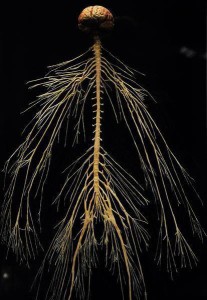
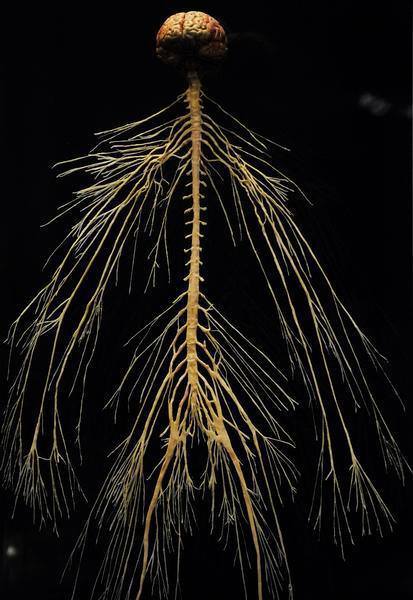
The nervous system is a complex and intricate network that is set up to help facilitate informational dialogue and exchange within you and throughout all the relationships around you.  The Nervous System consists of basically two parts:  The Central Nervous System and the Peripheral Nervous System.  You can think of these two different systems as a computer that relays information from one place to the other.  In the Case of the Central Nervous System,  we are focusing on the two structures: the brain and the spinal cord (long bundle of nerves).  The brain is the control center and the spine transmits information to and from the rest of the body.  The Peripheral side of things include the nerves or ganglia found outside of the Central Nervous System.

Nervous System

Craniosacral Therapy supports the health of the Nervous System


As you can see by the above picture, the CNS and PNS are extensive.  In Craniosacral Therapy, we use this knowledge to help clients to optimize their health benefits by keeping the cerebrospinal fluid (CSF) and soft tissue flow smooth and balanced.  By working with the Craniosacral System, we can subtly listen to how the tissues around the brain, along the spine and throughout the body are responding.   By working with symmetry, rate, amplitude and quality of the rhythm, we can help release restrictions and adhesions from around the nerves.  It’s important to allow for nervous system functioning to keep organs, muscles and intelligence of life operating in ease.

From my perspective, with Craniosacral Therapy, the primary focus is keeping the Nervous System healthy, and by doing this- we are also encouraging everything in the body to relate more efficiently and with proper functioning. When we feel good with our internal links, our external links and relationships feel better too.

Sharon Hartnett LMT, CST, SI

Advanced Certified Craniosacral Therapist

(614) 653-8111

Columbus, Ohio

(Most people have a basic understanding of the brain, but for a good resource to find out more about the Peripheral Nervous System, check out:

Peripheral Nervous System Disorders

Through the Mayo Clinic link)