(614) 653-8111 Sharhartnett@aol.com

Ankle Freedom, Upright Posture: A Craniosacral Perspective on Neck Health — Columbus Insights

Craniosacral Approach: Ankle Mobility for Better Posture & Neck Health in Columbus

After 30 years of being a craniosacral therapist and doing integrative types of bodywork,  it dawned on me how very important it is to free up the ankles in order for the neck to do the same.


A Bit about the Fascial System

The fascial system forms a continuous integrated architecture that literally connects your feet to your head.  Working with this seamless three dimensional connective tissue network beginning at the ankles and feet can make a huge difference in how you feel and move in your body.  It also directly affects the neck and it’s ability to sidebend, rotate and move in various directions.

Fascia is a seamless three dimensional connective tissue network that envelopes muscles, bones, organs, nerves and vessels.  It allows global integration and force transmission.  It is the medium through which all of life dialogues in my opinion.

In any case, recently what I have been noticing is that people who come in with neck issues, usually have a tightness in their lateral line.  That begins at the peroneous muscles and goes up through the glutes, transferring possible tension up into the SCM muslces and such.  Often this can lead to pain with headaches and migraines. There has to be efficient flow and communication from the head to the body, and the body to the head through the thoracic inlet.

Secondly, the plantar fascia and posterior needs to be considered as it deals with the arch and  gait for walking and movement.

We have other lines too from the toes which run up to the pelvis to the head as well.  So many relationships with which to work in order to restore better mobility and posture.

Your Goals with Craniosacral Therapy for your Health

The neck may be your weakest link.  You may come in with neck pain, and issues like migraines, headaches, and tinnitus.  You may believe that you need only local massage to release pain.  But this is NOT a local muscle problem.

With Craniosacral Therapy, we approach the whole body. As a Structural integration Therapist I look at the whole body. The reason is- every movemenet we make is about interconnected patterns.  What brings about optimal health and motion is addressing all the parts and patterns which add up to the whole.

As a somatic therapist, I know that you want to be feeling your best. I have to say though that most times, working only on the neck won’t bring you long term relief.  Everything needs to change to create better order and integration.

Whole body attention is much more comprehensive and effective.  You deserve to come in for treatments and to have your goals reached which most often are pain relief and better motibility. It is true that the neck probably needs a lot of attention, but the  thoracic inlet, head and everything down to your ankles and toes does need to be included  too in most cases.

My Goals for You with Craniosacral Therapy

First of all, my goal is whatever your goal is for yourself.  Each Craniosacral Therapy treatment is based on how your body communicates through the craniosacral system.  Bodies know how to move into the direction of healing, and I have faith in that dynamic to lead the session. In addition, I visually check your fascial alignment, and feel for twists, turns or any irregularities.  I treat based on what you and your body are telling me.  Each session is unique, as it should be as each person has their own way of developing and holding posture.

I find that by trusting the body’s communication and presnetation of patterns is the most effective way to treat.

Something I would like to invite you to do at home.

If your neck tightenss is  bothering  you, lie on the floor and feel how your neck and feet position themselves.  Are they even when you look?  Flexing your feet and pointing them, are you tight or do you move freely.  Can you move your feet from right to left and left to right with ease?  When you stand up, can you lift your toes? Do you stand on each side of your heal and the balls of your feet with balance.  What do your arches look and feel like?  Use your imagination and try to move your feet in many different planes of movement and see  what is limited and what is not.

After about 5 minutes of testing.  Get back on the floor.  Breathe in for 4 and out for 6.  Check in with your body and see how it feels after just the test. Do your ankles feel better?  Your neck.  Make a practice of finding ways to increase your mobility.

With Craniosacral Therapy, the motion tells me everything.  On a deeper level, I listen to what the fluids and nervous system show me.  I will help the body find alignment, and release tensions.  Even more powerful is helping you to center and integrate new changes that give you more freedom in your body.

My message to you is that everything is interconnected in regards to your posture. Your fascia and the Craniosacral System are key to releasing dysfunctional patterns.  However long it took you to get into a pain pattern- be patience and take your time to heal, and get well again.  You deserve Seslf-Care!

Sharon Hartnett CST-D

 (614) 653-8111

Text: To learn about my Craniosacral Therapy services, visit my  my Main Page Here.   Link


Craniosacral Therapist Columbus: Thank You For Allowing Me to Be Part of Your Healing Journey

Gratitude for Craniosacral Therapy

‘Craniosacral Therapist Sharon Hartnett in Columbus, Ohio

This is a short post of gratitude. 

I want to say thank you to all the people who have come to see me with trust and a need to heal. Healing is not for the faint of heart. It takes gumption and courage to face life sometimes. Especially when we are challenged.

I have been working with people of all walks of earth for about 30 years.  I have met a diversity of different clients from around the world, who look different, think differently and who present with one longing, and that is to know oneself and to truly heal.  My intention is to hold that for you and to nourish that intention with gentle and skillful support.

Yes, I do healing work.  But I am not the healer.  You are.  You are the person who can take charge of your ship and steer any direction you choose.  I am the oar that will help you move forward, especially when you are in dark waters.  Whether that is past trauma, stress, fear or a need to walk through the Unknown with another.

We are the empowered ones.  However, sometimes it does really help to get support. We need to sort through, to release and find our deeper resources.  That’s where I come in.  I want to help you find yourself and your true essence of “being here in fullness”.

At the same time, this brings a lot of meaning in my life.  I am priviledged and humble to be in the midst of this journey with you.  I learn and grow too.  My container expands and strengthen through every encounter. We all teach and learn from each other.  For me- love is the strongeest teacher of all.

Right now, I believe we all need to be here for each other.  None of us is meant to do it alone. The fighting and bickering needs to stop. Let’s stop pretending that we have to be self sufficient. Instead, let’s connect.

Right now is a good time to reach out to family, to friends, to include ourselves in community.  It a needed time to give thanks for what IS here now in ourselves and in each other.

I AM

May Peace be with you my friends.  

Sharon Hartnett CST-D

614 653-8111

To learn about my Craniosacral Therapy services, visit my main page here


The Healing Power of Touch: Craniosacral Therapy Columbus

The healing power of touch: Columbus, Ohio

The Healing Power of Touch: How Craniosacral Therapy Supports Whole-Person Wellbeing in Columbus, Ohio

The Healing Power of Touch

The world today feels divided and stressful for many people. Yet something as simple as gentle, intentional touch can open the door to deep healing. Craniosacral therapy is a hands-on approach that goes beyond physical pain relief — it supports emotional balance, nervous system regulation, and a sense of being truly seen and known.

Why Touch Matters

Touch is one of the first senses we develop. It’s essential for healthy development, calming the body, and fostering human connection. When offered with presence and compassion, touch communicates safety. It helps unwind stored trauma, soften chronic tension, and restore a person’s sense of wholeness.

Many of my clients describe a deep sense of relief when they feel gently met — without pressure, fixing, or judgment. Just being held in a field of care allows something deep within them to relax.

How Craniosacral Therapy Works

Craniosacral therapy works with the craniosacral system — the membranes and fluid surrounding the brain and spinal cord. Through light touch, this work helps the body shift out of “fight or flight” into a state of rest, healing, and integration. I go into the details in What Does Craniosacral Therapy Do?

People often describe feeling:

  • More grounded and calm
  • Reconnected to themselves
  • Lighter, clearer, and more emotionally centered

What the Research Shows

Growing evidence supports the healing benefits of compassionate, therapeutic touch:

  • Reduces cortisol (the stress hormone)
  • Enhances parasympathetic activity (the rest-and-digest response)
  • Improves emotional regulation and lowers anxiety
  • Increases heart rate variability — a marker of nervous system health

These physiological shifts create space for emotional healing, trauma resolution, and deeper self-connection. For people carrying chronic pain or recovering from an accident or injury, that shift is often where real change begins.

A Safe, Compassionate Space for Healing

At Lighten Up Therapies in Worthington, serving Columbus, Ohio, I hold a space that is gentle, trauma-informed, and grounded in decades of training and experience. Craniosacral therapy is more than a technique — it’s a way to return to your own inner wisdom and natural rhythm.

Whether you’re dealing with stress, trauma, chronic pain, or simply a desire to reconnect with yourself, this work offers a pathway toward balance and resilience.

Ready to Experience the Power of Gentle Touch?

If you’re curious about how craniosacral therapy can support your healing, I invite you to reach out for a free 15-minute phone consultation. Ask questions, learn more, and see whether this gentle work is a good fit for you.

Ready to feel better? I’m Sharon Hartnett, a Diplomate-Certified Craniosacral Therapist (CST-D) through the Upledger Institute, with about 30 years of experience listening to the body and helping it heal. My office is in Worthington, Ohio, and I serve the greater Columbus area.

Call or text me at (614) 653-8111 to schedule your free consultation.

Learn more about craniosacral therapy in Columbus, read answers to common questions about craniosacral therapy, or find out how to choose the best craniosacral therapist for you.

Why Self-Care Matters—Now More Than Ever

Self-Care with Craniosacral Therapy by Sharon Hartnett CST-D in Columbus, Ohio

In today’s fast-paced world, stress and anxiety are more prevalent than ever. The constant demands of work, family, and digital life can leave us emotionally drained and physically exhausted. For individuals in chronic pain, this cycle can become especially punishing—where pain fuels stress, and stress fuels pain.

Cultivating a self-care routine isn’t just a luxury—it’s essential care. For those juggling stress, anxiety, or chronic pain, self-care can:

  • Break the stress-pain cycle, calming the nervous and working with the fascial and musculoskeletal systems.
  • Improve mood, sleep, and resilience through regular relaxation and mindfulness practices.
  • Boost quality of life—especially critical for those managing long-term health challenges.

Key Self-Care Practices for Stress, Anxiety & Pain

1. Mindfulness & Meditation

  • What it does: Lowers anxiety, enhances emotional regulation, reduces chronic pain signaling.
  • Try this: Five minutes of mindful breathing daily, or guided meditations via apps. Or take a mindful walk outside!

2. Progressive Muscle Relaxation (PMR)

  • What it does: Reduces muscle tension, anxiety, insomnia, even chronic pain.
  • Try this: Tense and release muscle groups from head to toe, with deep breathing. Take your time!

3. Gentle Movement (Yoga, Walks, Stretching)

  • Encourages physical ease, mental clarity, and helps interrupt chronic pain patterns.

4. Craniosacral Therapy (CST)

There are Craniosacral Therapists across the world who work with people to deeply relax and to heal. Check out the Upledger Institute for a therapist near you.

5. Journal, Express Yourself in Safe Places, and Be Social


✨ Spotlight: Craniosacral Therapy

What it is
A gentle, hands-on approach where a trained therapist uses soft touch along your skull, spine, and sacrum to ease tension in the fascia and support the body’s self-healing mechanisms.

How it helps

  • Reduces headaches, neck/back pain, and other chronic pain symptoms.
  • Promotes deep relaxation and eases stress/anxiety by calming the nervous system.
  • Meta-review shows meaningful relief in both pain and improved function lasting up to six months (research review).

What to expect

  • Sessions last 30–60 minutes, fully clothed on a therapy table.
  • Many report deep calm, emotional release, sense of spaciousness.
  • Generally safe, though individuals with certain medical conditions should consult their provider.

A balanced view

Craniosacral Therapy is a unique experience for each person. The body holds the wisdom to heal and that Inner Physician is what leads the session. As such, you can depend that your sessions are different than other peoples. However, most people walk away feeling very calm, centered and relaxed in their mind, body and spirit.


Building Your Self-Care Toolbox

Here’s how to create a well-rounded routine:

Practice What It Does Frequency
Deep breathing or meditation Calms nervous system, reduces anxiety Daily, 5–15 min
PMR stretch session Eases muscle tension, pain, insomnia 3–5× per week
Gentle movement Improves circulation, mental health Daily or most days
Craniosacral therapy Releases chronic tension; resets pain/stress Weekly or biweekly
Journaling/social connection Processes emotions; strengthens support Weekly

Final Thoughts

Self-care isn’t about indulgence—it’s about repairing and protecting your system. Be Proactive! When you feel your stress or pain rising, lean on these practices before symptoms spiral. Over time, small, consistent habits build a powerful buffer against the daily overload.

If you’re struggling, especially with chronic pain or anxiety, consider adding craniosacral therapy to your routine. Consult your healthcare provider and seek out a trained practitioner. Combined with mindfulness, relaxation, and movement, CST can become a gentle yet potent path toward relief and resilience.


Reminder

Everyone’s journey is different—take time to explore what resonates with you. Consistency beats intensity. Start small, stay curious, and let your routine grow alongside your needs.

Take care of yourself—you’re worth the effort. 💛

Sharon Hartnett CST-D

 (614) 653-8111

Text: To learn about my Craniosacral Therapy services, visit my  my Main Page Here.   Link


What is Patience?

What is Patience?

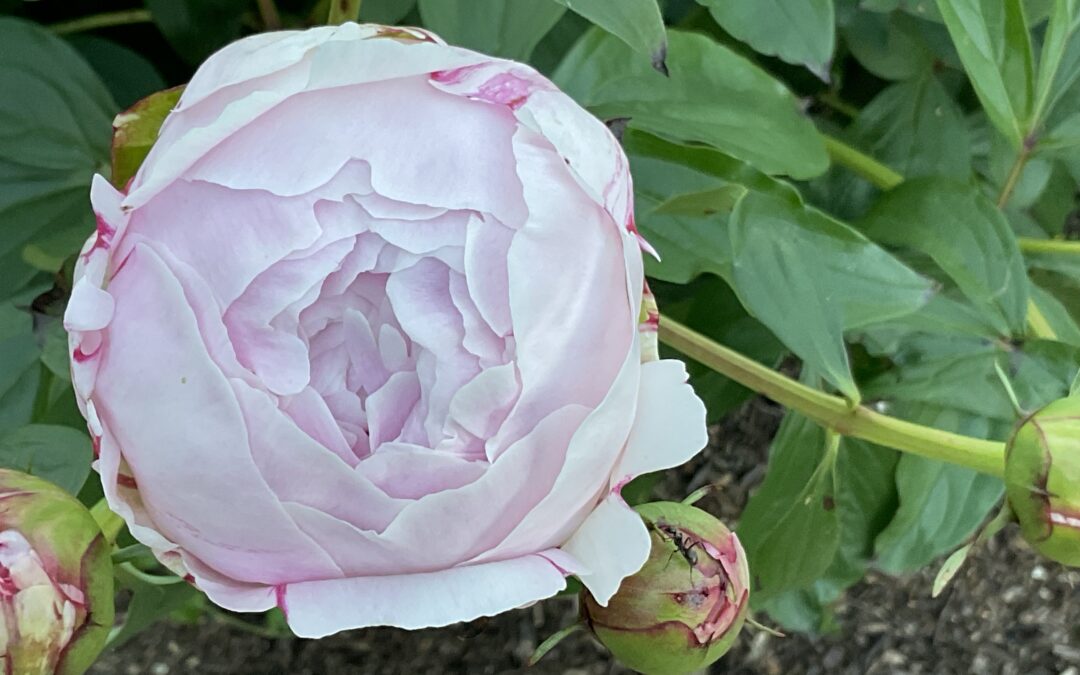
🌾 The Beauty in Waiting

Not all things bloom at once.
Some wait for the hush after the storm,
for the soil to soften,
for the sun to find the right angle
to kiss them awake.

We are no different.

There is a rhythm beneath the rush,
a wisdom in the slow turn of seasons
that no clock can measure.

Patience is not passive.
It is presence.
It is the art of listening
to what the body knows
but the world forgets—
that becoming takes time.

A seed does not doubt its path
just because no one can see it yet.
It rests.
It breathes.
It trusts.

And one day, quietly,
without needing to prove anything—
it rises.

Not because it was forced.
But because it was ready.
Because it belonged to the light
all along.

Sharon Hartnett CST-D

(614) 653-8111

To learn about my Craniosacral Therapy services, visit my main page.

Deep Healing Shifts That Unfold Gradually with Craniosacral Therapy in Columbus

Being Real with Sharon

Healing Is an Inside Job — It Expands Over Time, Usually Through Slow Change

Don’t Rush Healing. It Won’t Work. Healing Takes Time.

Do you expect immediate healing results? Welcome to the club. I’ve seen so many people come into my office expecting a lot from the first session. Often they’ve tried many healing modalities and nothing worked. Understandably, they’re disappointed, and they’ve learned to give up quickly.

The thing is, healing does work. The body has its own ability to self-correct, and it often comes back to equilibrium. The best time to begin a healing process is the moment something goes awry — act right away. That can mean rest, seeing a physician, seeing a craniosacral therapist, eating well. Whatever is needed to balance the body and move it closer to health and wellbeing.

The longer a person waits, the more the mind-body-spirit starts putting band-aids on the experience. Compensations begin. The intricate webbing of life, and the fascia along with every other internal system, reorganizes in a more sporadic, challenging way. That’s how chronic pain takes root.

With craniosacral therapy, the work is subtle. Some people don’t feel much in the first session. One reason is that pain or past experience keeps the mind from feeling deeply into an old habit or injury. It takes time for a relationship to develop and for healing to unfold — often many sessions. I explain what’s actually happening in those quiet sessions in What Does Craniosacral Therapy Do?

The gentleness, and being listened to through the body, may be a new experience. People may need to open to being held and supported. That sounds like it should be easy, but for many it isn’t. So many people live with anxiety; they don’t feel centered, safe, or secure with new sensations and feelings. What most of us need is to slow down, be heard, and have our bodies supported compassionately and with skill. That is the doorway into discovering our own healing abilities. I write more about that doorway in The Healing Power of Touch.

I like to remind people: it often took years, or a severe accident, to arrive at chronic or acute pain. It takes time to heal, too. Be patient with yourself. Breathe through it. Be kind to you, and be patient with the healing work you choose. It takes time to shift gears and wind down into healing mode.

I recommend at least four sessions just to see how your process shows itself. And remember, it doesn’t have to be painful, aggressive work that changes you. Sometimes it’s the opposite of anything you’ve experienced before.

As a craniosacral therapist, somatic healer, and energy healer for more than 30 years, I can honestly say there is an easier path. It isn’t always easy to navigate until you surrender into your own intention to heal. Your commitment is needed. You have to let the greater good direct your process. Like I said, it’s an inside job — but it isn’t meant to be done alone.

Ready to feel better? I’m Sharon Hartnett, a Diplomate-Certified Craniosacral Therapist (CST-D) through the Upledger Institute, with about 30 years of experience listening to the body and helping it heal. My office is in Worthington, Ohio, and I serve the greater Columbus area.

If you’re curious whether this gentle work is right for you, I offer a free 15-minute phone consultation. Call or text me at (614) 653-8111.

Learn more about craniosacral therapy in Columbus, read answers to common questions about craniosacral therapy, or find out how to choose the best craniosacral therapist for you.