614 653-8111 Sharhartnett@aol.com
Craniosacral and Tools for Foot Pain

Craniosacral and Tools for Foot Pain

Foot Pain: As we get older,  we pick up certain habitual patterns that contribute to how we feel and move.

Personally I have had issues with my right foot for years from a childhood sprain and twisting. The best I felt was about 20 years ago after going through a Rolfing 10 series.  After we finished,  I remember feeling so great and actually standing taller that I decided to study Structural Integration (SI) myself.  For years now, I have been doing SI work and I have seen miraculous changes with my clients. But since I have integrated Craniosacral Therapy, some Feldenkrais that I learned and a few basic tools into my daily practice and table work, I have shared these concepts in order to help others.  I like to see people get better!

So here is what helps me and my clients:

  1. Structural Integration helps the whole body come into alignment.  Myofascial relationships shift and work more efficiently with gravity.
  2. Craniosacral Therapy (CST)  relieves dysfunctional issues in the cranium and brain, and also with the fascia.  In addition, it helps to enhance fluidity around the joints and in the tissues and to support a nervous system that helps clients to feel balanced and more vitalized.
  3. The below tools have helped me too and give me a sense of self-empowerment to change.


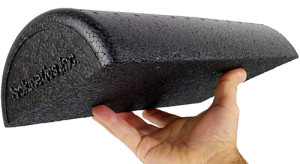
Red Ballrelieving foot painfoam roller


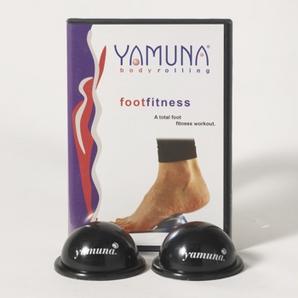
The roller, red ball and Yamuna foot fitness tools can be used daily to break up old patterns in the feet.  But this goes way beyond just the foot.  As the tension there begins to melt, the tissues going up the leg and trunk change too.  You will start to feel your hips changing and your posture relaxing.  Use your daily practice as medicine, and I invite you to go out on a limb and find some good bodyworkers to facilitate.

Good-Bye to Foot Pain!

Blessed day and blessed feet to you!

Sharon Hartnett LMT, CST, SI & Brennan Healing Practitioner

740 966-5153

Columbus, Ohio

www.massageincolumbusohio.com

Sports Conditioning with Massage in Columbus

Sports Conditioning with Massage in Columbus

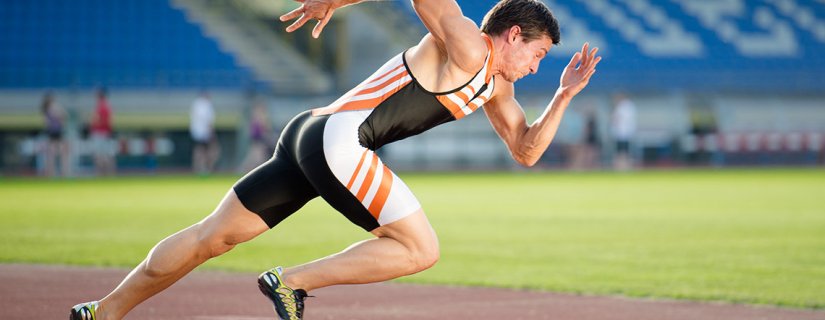
Sports Massage is a Specialty.

It is focused on performance.

Many different techniques have been used to help athletes work optimally.  Just to name a few:  friction, stretching, range of motion, effleurage, compression, and deep strokes have been part of a typical routine to help circulation, lymph flow, and enhanced neurological functioning.  Massage can be enjoyed before or after an event based on the needs of the athlete.

I like to think that there is an even better way to help sports-oriented people feel and challenge themselves.

Structural Integration which is based on fascia and myofascial relationships is key in allowing the body to release tension, rotations, and restrictions.  When I have worked on athletes, young and old alike,  I have seen dramatic changes which have increased mobility and allowed more space for the body to lengthen and perform better.  Clients are amazed at how this type of work helps where others have not!

In the best 10 series, clients connect to their line.  What this means, is that a vector of sorts is felt from their grounding to the top of the head which allows them to move more freely in relationship to gravity.  Being in alignment creates better efficiency in rest and in motion!  During a 10 Sessions Set,  the Structural Integration Therapist starts with the upper body, and then moves to the lower, and then integrates superficially.  After that, the work deepens into core and continues to balance and re-educate the athlete to work with more ease.  By the last session, well- everything comes together in a new way.  Clients feel more energized.


sports massage columbus

sports massage columbus

The three areas that most athletes call for a massage visit that I see are:

1.  Performance Enhancement- Bringing symmetry, more vitality and balance into the body.

2.  Sore Muscles

3.  Injury/Restoration/Scar Tissue

Working with the fascia can be extremely beneficial in all three of these areas.

If you would like to find out more,  call: Sharon Hartnett, LMT, SI, CST, and Brennan Healing Science. at:

740 966-5153

www.massageincolumbusohio.com 

East of Columbus, Ohio


Arthritis Pain Management

Arthritis Pain Management

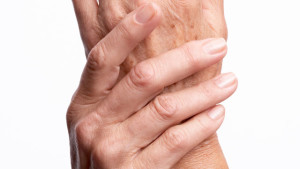
Arthritis Pain…Are your joints becoming inflamed causing chronic pain and fatigue?

Keeping an open mind to various treatments for arthritis can be your best bet.

There are many articles online about natural remedies to take such as Sam-E, creams, Magnesium,  along with conventional medicines that are aggressive and have side effects, etc… but have you heard of Craniosacral Therapy?

Craniosacral Therapy (CST) is so gentle that practically any person is able to receive the work and feel better.  It is based on the principle of listening to the body’s own internal resources for direction that know how to help maintain and repair damage.

In my office,  I have often combined myofascial release techniques along with CST with amazing results.  I had one woman recently who could hardly turn her neck, and could barely get through the night with a full night’s rest. Her medical history with a disk replacement was just the beginning to her ongoing pain. For years she had suffered miserably.  In just a few sessions, she is feeling much better rested, and pain free.  She told me she feels like she has a new body.

Honestly, I don’t take credit for this.  It is her self-correcting inner source mechanisms that know how to heal.  I just help her to tap into that so that health and wellbeing is restored.

arthritis

arthritis

Two Main Areas to Work to alleviate arthritis pain:

Fascia:  Releasing restrictions in the fascia can help the body to let go of stress and tension, while increasing better circulation and energy flow.  As has been more recently discovered, the fascia tissue is a fundamental communicator in the body,  The more fluid and hydrated the tissue, the healthier the body is in relaying messages.  Tissues and body systems that work together stay resilient and recover quickly as the tissues slide freely next to each other.  Fascia is also like a web that wraps around the body and contains throughout.  If one spot in the body is brought out of alignment, it pulls from other area.  Compensation soon leads to dysfunction longterm if not treated.  Connective Tissue Massage can be very beneficial for this type of pattern.  It’s important to remember that fascia is also key in keeping structure, but also in promoting flexibility.  Exercising, Fascial Therapy and moving multi-dimensionally will keep you feeling healthy and optimally.  Working with a Structural Integration Therapist, CST or a Rolfer can really change how you move and feel.

Craniosacral System:  The Craniosacral System is a Semi-closed hydraulic system. The membranes and fluid that surround the brain and the spine contribute to the protection and the nourishment of the nervous system.  Since the Central Nervous System controls the rest of the body,  it is a key area to work with to address dysfunction and ill health.  A Craniosacral Therapist works with the bones and the fluid to help the body to reconnect to its own Inner Physician. The cebrospinal fluid is created in cycles and reabsorbed continuously , but do balance out. So we work with following and supporting symmetrical and powerful flexion and extension cycles during these rises and falls is essential to good overall health..

Between the fascia and the CST,  we can feel into holding and restrictive patterns easily through the whole body.  The combination releases area where the muscles and joints are tight, allowing more mobility and ease in the body.

For more information, please feel free to call Sharon Hartnett at (740) 966-5153 for a 15 minute phone consult.

Arthritis pain can be helped through diet choices, herbs, movement, good rest and medicines to say the least.  Why not add some manual bodywork to deepen your potential to heal?

Sharon Hartnett LMT, CST, SI

703 509-1792

www.upledger.com

www.cranioscraltherapistcolumbus.com


Carpal Tunnel Syndrome

Carpal Tunnel Syndrome

Resolving Carpal Tunnel Syndrome symptoms…

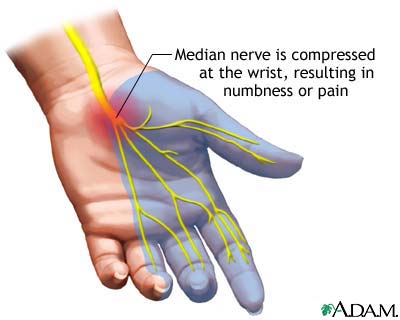
It’s interesting to me that clients who come in with Carpal Tunnel Syndrome have been told that the main issue is a pinched nerve in the wrist that causes pain, tingling and numbness.  While this is true on one level as the median nerve is compressed, many massage therapists and bodyworkers have found that the shoulder and neck posture or tightness are also main contributors to this condition. A holistic approach is often needed if the problem does not go away on its own.

Carpal Tunnel Syndrome

Carpal Tunnel Syndrome

Some of the symptoms of Carpal Tunnel Syndrome:

  • Pain
  • Tingling
  • Numbness
  • Weakness
  • Stiffness
  • Swelling

Carpal Tunnel Syndrom is a gradual process of dysfunction.  Repetitious movements can be a big contributor. The smartest thing to do for the easiest healing process is to face it straight on when experiencing the above symptoms at the onset.  If you treat for it immediately by resting or stopping activities that aggravate it, it may go away on its own in a couple of weeks.  Working with a PT and/or a Licensed Massage Therapist can also help alleviate pain and support the nervous system as well.  By working with the shoulder girdle, scapula, neck and ribcage, arm and wrist- basically anywhere from where the spinal nerve leaves to it’s end facially,  the client can often find a reduction in symptoms in a few weeks.

Carpal Tunnel Syndrome can take you out of work.  Consider listening to your body when you notice any of the above imbalances.  Being proactive is always easier than being reactive!

Sharon Hartnett LMT, CST, SI

Columbus Ohio Massage Therapist

www.massageincolumbusohio.com

(740) 966-5153

Massage Improves Flexibility of Soft Tissue

Massage Improves Flexibility of Soft Tissue

One of the chronic physical conditions that benefits best in the world of manual therapy is the lessening of pain for clients by helping to loosen direct and indirect soft tissue restrictions.

In my practice, I have found two areas of massage therapy that have consistently proven to help increase range of motion and to relax the musculatures and other internal systems so that the body can fall back into its natural alignment: 1. working directly with the musculature and 2. also by focusing on fascial tissue.

Most people who have received basic massage know what it feels like to have a muscle worked.  You go in and you feel either light or deep pressure going inward and moving in a certain directions.  That can feel wonderful. Your circulation increases, stress melts away, and the lymph system works more efficiently, all with an hour of massage.  But if you want longer lasting structural change, the fascial component of the work can create longer lasting shifts and release bones and other adhesions that hinder good flexibility.  This feels very different in quality when receiving because the intention is to work with this web of tissue that contains and runs through almost everything in the body.  Either using fingers, the hand, or an elbow, the practitioner enters the fascial system and helps it to stretch or unwind so that the client can move more freely. She can work with the bones, the viscera wrappings, and all the contents either directly or indirectly while inviting the client to move certain ways to find length and movment.  As one point or section is released, the rest of the body feels he tautness let go too, even if on an unconscious level.  Everything is connected in the body and the fascia is key into bringing balance throughout the whole structure.

Massage in Columbus

The New Frontier in Pain Relief!t

In the quiet of the body there is nourishment.  At the same time, the body also needs to move from the cellular level to the larger systems to stay healthy.  Deep myofascial work can do wonders to help you accomplish this by touching into stuck places and releasing old patterns.  Through therapies like Craniosacral Therapy with a light touch or Ida Rolf’s 10 Session protocol for Structural Integration, fascial work will bring balance and lightness back into your step!

Sharon Hartnett LMT, CST, SI

Columbus, Ohio

703 509-1792

www.massageincolumbusohio.com


TMJ and Clenching

TMJ and Clenching

Does anyone know how to resolve TMJ and Clenching Problems?

I would really like to tell you that there is an easy fix for the pain in your jaw, but that isn’t always true.  While some cases go away by themselves over time, others continue to get worst.

TMJ

TMJ

TMJ is a disorder that can cause stress and pain to the temporomandibular joint and surrounding soft tissue.

With more that 15% of adults living with fascial pain, earaches and ringing, jaw pain and headaches, it may behoove the person suffering from this condition to try various methods to get the help they need.  If you are experiencing any of the following symptoms while opening, closing or moving your mouth, or while sleeping or awakening in the morning, you may be in need of some support to restore and rebalance the positioning of the head, neck and mouth in relationship to healthy postural alignment throughout the body:

  • difficulty opening and closing the mouth.
  • jaw pain while yawning or chewing.
  • pain or ringing in the ear area.
  • hearing and/or feeling popping or clicking sounds.
  • headaches.
  • tenderness around the teeth and gum areas.
  • teeth grinding
  • jaws get stuck or locked.
  • any swelling in the face

These are all common symptoms of what is know as TMD (Temporal Mandibular Disorders).

With a background focused mostly in Structural Integration and Craniosacral Therapy, I have found 5 things that seem to help clients improve and resolve this condition.:

  1. Myofascial Structural Therapy to improve how the head rests over the body.
  2. Craniosacral Therapy to improve movement within the sutures and to create balance in the cranium.
  3. Stretching and Movement Exercises.  Not only are neck exercises crucial for improving neck posture, but also the pelvis needs to be freed up and  symmetry between the legs established in order to help self-correct TMD.  Some great options would be yoga, Feldenkrais, Continuum, gyro tonics and free dancing.
  4. See a dentist for a bite appliance.  However, from a bodyworker perspective, I suggest one for the lower teeth rather than the top which is usually recommended.  Wearing any type of appliance on the top that restricts movement of the maxilla only inhibits healthy movement of the cerebrospinal fluid.
  5. Meditation to reduce stress. The Central Nervous System Stress can play a big factor in mouth disorders by creating tension in the musculature. Letting go of stressful beliefs through inquiry (www.the work.com) or something like breathing exercises or a walk through nature can be very helpful.
  6. Explore options with your pillow.  If you sleep on your back, you don’t need one.  However, if you sleep mostly on your side, there are some nice posturepedic options available.
  7. SomatoEmotional Release helps clients to feel deeply into their bodies and let go of unhealthy energy patterns of stress.

Three things to avoid:  Chewing gum and holding your cellphone in your neck.  Stop slouching and find length in your spine while reading or sitting at a computer.  

If you are in the local Columbus Ohio area, or would like a free  15 minute phone consultation, please feel contact me.

Sharon Hartnett CST, LMT, SI

(740) 966-5153

www.massageincolumbusohio.com