(614) 653-8111 Sharhartnett@aol.com
SomatoEmotional Release (SER) in Columbus, Ohio: What It Is and How It Works

SomatoEmotional Release (SER) in Columbus, Ohio: What It Is and How It Works

Many clients who come to me for craniosacral therapy ask about SomatoEmotional Release (SER). They have usually heard from a friend how much better they felt after a few sessions, but they are not quite sure what it is. This page explains SomatoEmotional Release in plain terms: what it is, what a session is like, and who it may help.

What Is SomatoEmotional Release?

The name says it. Somato means relating to the body. Emotional refers to feelings. Release is freedom.

SomatoEmotional Release is a hands-on approach developed by Dr. John E. Upledger as part of craniosacral therapy. It is based on the idea that the body can hold on to the energy of an injury or a difficult experience long after the event is over. Dr. Upledger called these held places “energy cysts.” The body walls the energy off as a way of coping, but it does not fully let it go.

SomatoEmotional Release therapy gives the body a safe opportunity to finish what it could not finish at the time. When the cycle completes, the residual effects of the old experience can soften, and many clients tell me they feel lighter, clearer, and more at home in themselves.

How a SomatoEmotional Release Session Unfolds

SER begins with an atmosphere of trust, respect, and gentle touch. You rest fully clothed on the table. I listen with my hands to the craniosacral rhythm, paying attention to its quality, symmetry, rate, and amplitude. That rhythm is my guide to where the body is holding restriction.

From there, I follow what Upledger practitioners call the Inner Physician, the intelligence within you that knows what it is ready to work with. I do not push, direct, or give advice. Sometimes a session stays quiet and physical, and the tissues simply relax and expand under my hands. Other times a feeling rises to the surface: a small reminder of an uncomfortable emotion, a tear running down a cheek, an image, or a memory. Whatever shows up is welcome to be felt, witnessed, and released at your own pace.

My most important intention is to hold a space for the whole person, mind, body, and spirit, without judgment. Gentle dialogue may be part of the session, always led by you.

How SER Differs from Massage and from Psychotherapy

Massage works mainly with the muscles and soft tissue. Psychotherapy works mainly through talking. SomatoEmotional Release sits in a different place. It begins with the body and the craniosacral system, and it allows emotion to be part of the session when emotion is what the body brings forward.

It is important to know that SER is not psychotherapy, and I am not a licensed psychotherapist. Upledger-trained therapists are taught to support your own process as it unfolds, without interfering and without analyzing. SomatoEmotional Release can be an excellent addition to counseling or psychotherapy, and some clients do both. If you are working with a mental health professional, I encourage you to continue.

Who SomatoEmotional Release May Help

Over my many years as a licensed massage therapist and bodyworker, I have seen clients come in with pain or with challenges in everyday life, unable to identify the source. People often seek out SER when they are living with:

  • The lingering effects of a car accident, a fall, or a surgery
  • Stress or anxiety that seems to live in the body
  • Grief, a divorce, or another major loss
  • Old trauma, including post-traumatic stress
  • Chronic tension or pain that has not responded to other care
  • A sense of being stuck

Clients often tell me they feel more balanced after a session, not only emotionally but physically as well. People who arrive feeling overactive inside often become quiet and calm. Others who feel tired pick up energy as they come closer to equilibrium. Every person is different, and I cannot promise a particular result.

The emotional side of the body also shows up in how we stand and move. I write about that in how posture and emotional release work together.

SomatoEmotional Release and Other Body-Centered Work

SER is one part of the way I work. In a session it often blends naturally with craniosacral therapy, and it shares a great deal with somatic, trauma-informed bodywork. If you are curious about how touch-based somatic work compares with a regular massage, see my article on somatic massage.

Training Matters

SomatoEmotional Release is taught through the Upledger Institute, and the foundation of the training is the craniosacral system. That training prepares a therapist to stay present with whatever arises without trying to control it or fix it. I hold the Upledger Diplomate certification (CST-D), the Institute’s highest level. You can read what CST-D means and how to choose a craniosacral therapist.

Frequently Asked Questions About SomatoEmotional Release

Is SomatoEmotional Release the same as craniosacral therapy?

SER grew out of craniosacral therapy and uses the same gentle touch. Craniosacral therapy focuses on releasing restrictions in the craniosacral system. SomatoEmotional Release goes a step further by making room for the emotional side of what the body is holding. Some people call it a craniosacral release.

Will I have to talk about my past?

No. You are never asked to retell or relive anything. Some sessions involve gentle dialogue and some are nearly silent. You decide what you share.

Will I cry or feel strong emotions?

Some people do and many do not. An emotional release can be as small as a sigh or a deep breath. Whatever happens, the pace is yours.

Is SomatoEmotional Release psychotherapy?

No. It is hands-on bodywork. It can work well alongside counseling, but it does not replace mental health care or medical care.

How many sessions will I need?

It varies from person to person. Some clients notice a shift in one session, and others come for a series. We can talk about what makes sense for you.

Is it spelled SomatoEmotional Release or Somato Emotional Release?

Dr. Upledger wrote it as one word, SomatoEmotional Release, shortened to SER. You will also see somato emotional release and somato-emotional release. They all mean the same work.

SomatoEmotional Release in Worthington, Serving the Columbus, Ohio Area

If your emotions are keeping you from relaxing and enjoying your life, or tension in your body is causing pain, SomatoEmotional Release may be right for you. Call me for a free 15-minute phone consultation and we can talk about what you are looking for.

Sharon Hartnett, LMT, CST-D
Lighten Up Therapies
6797 N High Street Ste 333, Worthington, Ohio 43085
(614) 653-8111
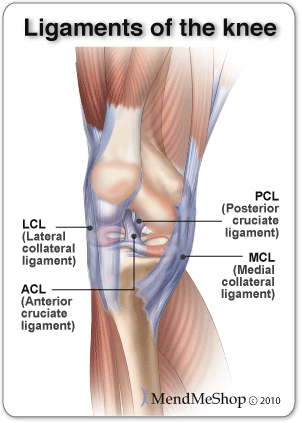
Sports Related Knee Injury

Knee injury is one of the most common sports related reasons that bring patients to the doctors office.

knee injury

knee injury


Be proactive if you feel any pain, notice popping sounds, see any swelling or can’t walk properly.  It is important that you don’t put off getting the proper treatment for knee injury if you want to avoid long-term negative repercussions.  If you are fortunate, with your physician’s recommendation, you can apply basic first aid, and take some Ibuprofen and everything will heal nicely.  However, you don’t have to stop there.  Structural Integration with its fascial massage can be very helpful in alleviating any stress around the knee, the quads, and the hamstrings.  This can be done for minor ailments, or once your doctor recommends if surgery if needed.  The body is miraculous at healing itself.  However, the new tissue that is laid is not going to give you the same mobility you once had in many cases unless the fascia is spread, balanced and lengthens, allowing for more natural alignment.

If you are interested in playing sports and performing to your optimal level,  Structural Integration can be very helpful in supporting you to relate movement to your activities with higher performance.

Working with the fascia can be done starting with the superficial layers to help ease the pain around the joint.   As the work is deepened, it unlocks habitual patterns, and also those that resulted from the injuries.  Often clients feel the positive effects from doing a series of session more than with other types of basic massage.  That is because the adhesions and rotations, once they are released, stay that way,  allowing for more freedom and flexibility.

If you have had a knee injury and are looking for a therapy that can make a difference, call Sharon Hartnett LMT at (614) 653-8111 in  Columbus, Ohio.  

craniosacraltherapistcolumbus.com


Healing… How Long Will It Take to Feel Better?

Curious about how many healing sessions you need to resolve pain issues?

Well, the truth is no healer or therapist can give you that answer if they are being honest.

What we can offer is that we will use whatever tools and compassion we have to help you along on your journey back to health.  And if you are looking for the best massage therapist, healer, health coach that can help you to re-connect to that force inside of you that can shift things toward wellbeing, the best thing you can do is interview, try new healing modalities, and make a commitment to stay with your own process as you learn from each relationship and experience.


Healing

Healing


When you interview possible massage therapists, the first thing you want to do is check in with your own intuition to see if you feel comfortable with yourself when you meet.  If his/her presence sets the space as a comforting and an honest environment for you to open up, then that is a good indication.  Next, it is important that you feel like your needs are really heard.  Some therapists have routines and just do their thing.  It is much more helpful to clients if each session is set up as a unique and moment-to-moment type of therapy.  That way the dialogue between you and the therapist is based on the body’s own wisdom to self-correct through positive intervention.  On the same note,  in regards to communication,  let your therapist know what pressure works best for you.  Often the body will say one thing, but the ego has a completely different itinerary.   Both of these need to be alignment for the best results. Lastly, look online for testimonials and google reviews.  There is a huge difference between beginner practitioners and people will experience.  You do actually pay for what you get for the most part when it comes to massage and healing.  This is not to say that you won’t receive a good session from someone right out of school, but they won’t hold the same depth and width of hands on experience.

I have lots of clients who tell me that they have tried everything and nothing works.  Well-  that can be a challenge if the client doesn’t learn and see the benefits of each interaction.  What I can say is that if you are in pain,  that is your body or spirit telling you that something needs to change and your own system doesn’t have the answer yet.  With this said,  the history in the biology has often taken a lot of time to go awry,  it takes time to work through restrictions, compensations and such before getting to the Source sometimes.  Open your mind to new things.  Allow yourself to trust your intuition and the people you work with. With time and patience, and good work- things can and often do change toward the positive.  

Stay committed to your healing process.  Nobody can fix you, but plenty of people and life itself will help you to heal.  Dance in the new relationships you make, and don’t let anything or anyone take you off course from yourself.

Pain is an indicator that lets you know that something needs to change.   Trust what is being created and let go of what you no longer need.  Whether it is physical, emotional or spiritual-  with positive intention- you can find your way back to Source.

Sharon Hartnett LMT

(614) 372-6598

craniosacraltherapistcolumbus.com

Trusting the Wisdom Within With Craniosacral

One of the greatest things about Craniosacral Therapy (CST) is that this modality is all about trusting your own body’s wisdom to heal.

Yes it is important to find a Craniosacral Therapist who is knowledgeable and has good experience with your issues.  However- the best session will be all about having faith in the process.

During a Craniosacral Session,  the first thing your practitioner will do is listen to your body to find out where there might be dysfunctional patterns that lead to pain and other ailments.  This is done by starting at the feet and moving up to the head in order to check for amplitude, symmetry and other qualities of the craniosacral rhythm throughout the body.  Once the primary lesion is discovered, it is easy to go to that area and start the session for healing.  The rest is about following the body’s response to the work.

During evaluation and thereafter, Craniosacral Therapy touch is gentle and non-invasive. There are very few contra-indications with CST, yet the effects are far reaching and profound in your healing process.  The primary benefits that you will first feel are relief of pain, more flexibility and often more vitality.  By working primarily with the Central Nervous System as the focus, a Craniosacral Therapist can dialogue with every other body system to support the integration of full body functioning.  Often clients are unexpectingly surprised that there can be so much change in attitude, feeling and sensation after just a few session.


Craniosacral Therapy Columbus Ohio

Craniosacral Therapy as taught by the Upledger Institute

If you would like to find out more about Craniosacral,  please contact Sharon Hartnett for a free 15 minute telephone consultation:  (614) 372-6598.  

Craniosacral Therapy is a self-discovery process of remembering your own light!  It’s always present.

Website:  craniosacraltherapistcolumbus.com


Craniosacral Therapy for Children with ADHD

Does Your Child have ADHD?

It’s sometimes difficult to distinguish whether your child is suffering from actual ADHD or experiencing life with a typically high activity level with a short attention span. But what a parent does know is that it can be challenging trying to fit their kids into a mainstream educational system without some extra support.


Massage Columbus

Regulating life through New Sensory Input.

At Lighten Up Therapies, we are not so concerned where your child falls in the spectrum of ADHD, but instead we choose to focus on giving your child a new integrative mind, body & spirit experience. We have been intrigued with the success that Craniosacral Therapy has had with young people in helping them to self-regulate and be more comfortable in their daily lives. A quote that describes our outlook to healing is well spoken by Moshe Feldenkrais, “What I’m after isn’t flexible bodies, but flexible minds and to restore each person to their human dignity.”  So how do we help children to find more joy and emotional balance through massage and bodywork?

It’s very helpful to imagine the mind as being inclusive of the whole body, and if you can even go outside the box a little further, into the complete human energy field. When we can allow kids to become mindful of their physical self and subtle energies if only for a few minutes here and there during a session, the brain becomes better informed. Sensory information attained through the fascial and nervous system can enliven the DNA to express itself in a new way and change our thinking and expression. By touching into the continuous web of dialogue, children can become better educated to find quiet and self-correction

One of the first things that is helpful for children during a session is to induce a still point. A still point is a period of time in which the cerebral spinal flow comes to a rest, allows improved circulation to the brain, and helps relieve adhesions around the brain’s membranes and spine. Still points can be very calming and nourishing to the nervous system. It may take time with children who don’t want to sit still, but with patience, still point is a practice that can be taught to parents and felt deeply relaxing by their children.  One of the best things a practitioner can do is give their clients tools to take home to carry the work forward.

While children with ADHD might initially avoid this type of experience, eventually- the new felt sense of the subtle work of Craniosacral regulation will begin to take root. The calm will open the doorway to a more relaxed sense of wellbeing. At this point, we can then proceed with checking the diaphragms for release, listening to the flow around the spine and brain, and to encourage symmetry, strength and coherence within all the systems. With this work, as the structure changes, so does the way the energy moves The internal environment can integrate with the mind body & spirit sense of reconnection!

One of the best things you can do it interview. Sharon Hartnett LMT CST offers 15 minute free phone sessions to answer your questions at: 

FAQ Page

Sharon Hartnett CST-D

Worthington, Ohio|Serving the Columbus Area

614 653-8111

To find out more about Craniosacral Therapy, check out my main page.

Helping your children to become more focused and centered is an experiential commitment.  It often takes time to see improvements, but in most cases, dramatic change does show up.

If you would like to try a session to gain your own first hand experience of Craniosacral Therapy, ask for $10.00 of your first session. 

www.upledger.com

What is Craniosacral Therapy? Sharon Hartnett CST in Columbus, Ohio

When I tell people I specialize in Craniosacral Therapy, they often ask me to describe what it is. While Craniosacral Therapy has been around for a while, it is just now coming more into the forefront as being known as an effective integrative health approach. So in order to bring even more clarity to this field of healing, I want to present this short blog entry. If you have any further questions, please feel free to contact me, Sharon Hartnett, LMT, for a free 15 minute phone consultation at (614) 653-8111.

Craniosacral Therapy is a light touch type of bodywork that enhances the functioning of the whole body by working primarily with the Cerebrospinal fluid around the nervous system. This is done with palpation from the feet all the way to the head. The name “Craniosacral Therapy” can be misleading because while the main focus is on listening at the cranium and the sacral area, this gentle manual therapy may be approached from anywhere on the body. During a session, a client remains fully clothed and lies down on the table for about an hour. The therapist will follow listening stations and help the body find its own healing course. Craniosacral Therapy’s relaxing and balancing effects may be felt physically, emotionally and spiritually throughout the session and afterwards.

A Craniosacral Therapist is a listener of the craniosacral rhythm much like a Counselor may listen to the words of a client. As the session progresses, the client often calms down and lets go of stresses and pain. The therapist is guided by the body’s own intelligence to follow any dysfunctional patterns and to help the system to self-correct. The quality, symmetry and strength of the craniosacral movements are strong indicators if there are restrictions or weakness in a certain area. As certain patterns are tenderly touched, unwinding and lengthening may occur allowing healthier interaction between the nervous system and the tissues. Often people who come to a Craniosacral Therapist for a series of sessions after finding no relief elsewhere end up feeling more vitality and release of deep pain patterns.

For a quick Youtube layout of the work, check out one of my earlier teacher’s explanation of the work: Watch the video on YouTube

Craniosacral Therapy has been helpful with relieving traumas from the body on many different levels. Once these traumatic experiences are processed in a healthy environment, the person usually feels freed up to live more fully from a clear more positive intentional place.

Sharon Hartnett CST-Diplomate specializes in helping people with anxiety & related issues, concussions, and chronic pain.

FAQ Page

Sharon Hartnett CST-D

(614) 653-8111

To learn about my Craniosacral Therapy services, visit my main page.